

Flashback Friday: 10,000 Days by Tool
A Look Back Twenty Years In The Making
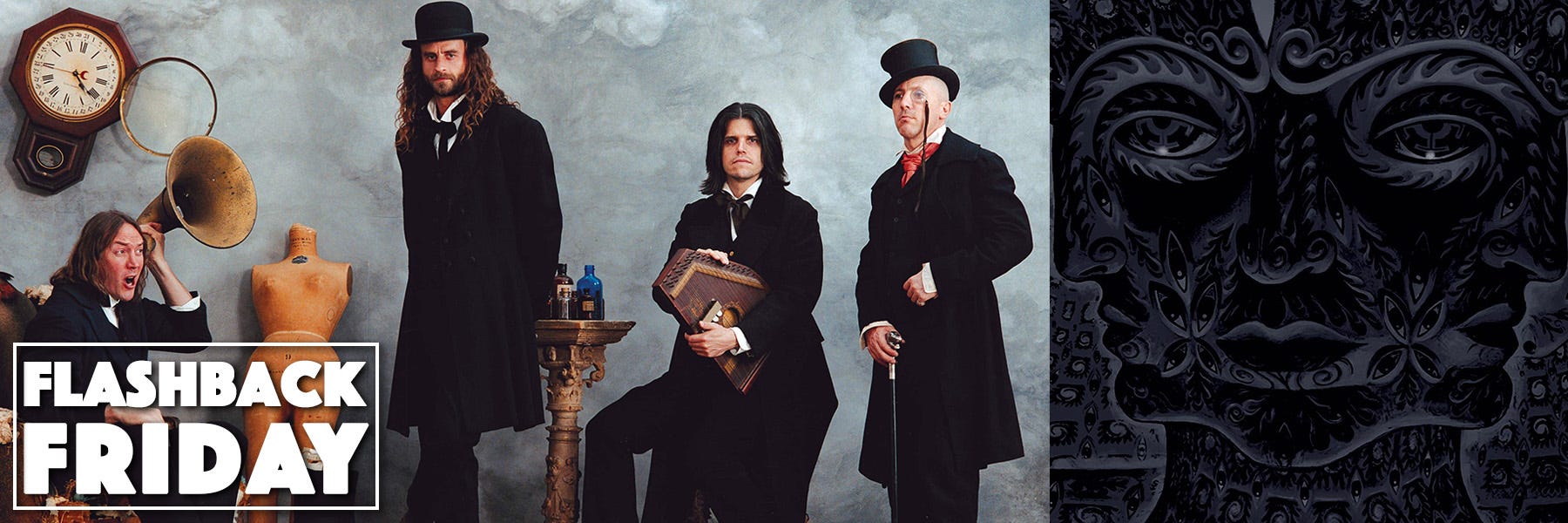
Released on May 2, 2006, Tool’s 10,000 Days arrived at a strange crossroads. It followed the era-defining Lateralus, a record so mathematically precise and spiritually focused that many fans felt Tool had reached the “final boss” level of progressive metal. Two decades later, 10,000 Days no longer sits in the shadow of its predecessor. Instead, it stands as the band’s most human, grounded, and visceral work—a bridge between the cosmic mathematics of their youth and the atmospheric mastery of their later years.
If Lateralus was an album about reaching outward toward the universe, 10,000 Days was about looking inward at the wreckage of reality. The transition was jarring for some in 2006. The band traded the clean, transcendent production of David Bottrill for a thicker, more “muscle-bound” sound, bringing in Evil Joe Barresi to capture a raw, almost tactile energy.
When 10,000 Days hit shelves in May 2006, the rock landscape was undergoing a massive identity crisis. The “Post-Grunge” boom of the early 2000s was fading into radio-friendly stagnation, and the “Garage Rock Revival” (led by The White Stripes and The Strokes) was already being eclipsed by the rise of Emo and Pop-Punk.
In this environment, Tool was an anomaly: a band that refused to make music for the burgeoning “digital download” era, instead releasing a physical package that required a set of built-in stereoscopic lenses to view 3D artwork by Alex Grey. This wasn’t just a gimmick; it was a cultural statement. They forced the listener to stay in the room, to hold the album art, and to engage with the music as a singular, 76-minute ritual (like music fans used to do back in the 70s and 80s).
Side Note: At the time of the album’s release, I was working at Yahoo! Music, and distinctly remember heading out to leisurely Friday lunch with a group of co-workers and forcing everyone to stop at Best Buy in Santa Monica, CA. so I could buy this album. It went straight into the car’s CD player and essentially became my exclusive soundtrack for months thereafter.
Despite being the antithesis of “radio-friendly,” 10,000 Days was a massive commercial juggernaut. It debuted at #1 on the Billboard 200, selling over 564,000 copies in its first week. To put its dominance in perspective, other heavyweight releases it shared the charts with in May 2006 included Pearl Jam by Pearl Jam (also released on May 2nd), Stadium Arcadium by Red Hot Chili Peppers (released May 9th), and Don’t Need to Whisper by Angels and Airwaves (released on May 23rd).
Rock radio at the time was also dominated by tracks like Nickelback’s “Animals” and the chart-topping emo anthems of Hawthorne Heights or Taking Back Sunday. Tool occupied a space that felt entirely separate from this “scene.” While other bands were trimming songs down to 3 minutes for iTunes, Tool’s “Vicarious” (7:06) and “The Pot” (6:21) became massive radio hits. They were the only band in the Top 10 that could force a mainstream DJ to play a 7-minute song about the “morbid curiosity” of the public.
2006 was the year Twitter launched and the year digital piracy (Limewire, BitTorrent) was at its peak. By this time, guitarist Adam Jones had fully integrated his background in special effects into the band’s identity. The artwork, featuring Alex Grey’s “Net of Beings,” moved Tool’s aesthetic away from the “body horror” of the 90s into “transcendental surrealism.” The physical CD case featured dual lenses that allowed fans to view the booklet in 3D. In a world that was beginning to shift toward low-bitrate MP3s and the early days of iTunes, this was a defiant statement on the importance of physical media as art.
Unlike Lateralus, which was almost universally worshipped, 10,000 Days actually split the critics in 2006. Some reviewers felt the album was too long or that the ambient interludes (like “Lipan Conjuring” or “Viginti Tres”) were “filler.” Others argued that Tool had finally perfected their sound. While the Red Hot Chili Peppers were leaning into funk-pop and Pearl Jam was returning to straight-ahead rock, Tool was pushing the boundaries of what Heavy Metal could be, blending avant-garde influences with progressive rock.
Musically, the album pushed the boundaries of “prog” further than their previous work. In “Rosetta Stoned,” drummer Danny Carey often plays in three different time signatures at once—his feet, left hand, and right hand all operating on different cycles. This wasn’t just technical showing off; it was used to mimic the frantic, hallucinogenic narrative of the lyrics, creating a sense of “controlled chaos.”
Songs like “Jambi” introduced a mechanical, churning precision that felt more like heavy machinery than a spiritual experience. Adam Jones’ use of the talk box and Justin Chancellor’s grinding bass tones gave the album a physical weight that Lateralus lacked.
The centerpiece of the album—the 17-minute odyssey of “Wings for Marie (Pt 1)” and “10,000 Days (Pt 2)”—marked a massive shift for Maynard James Keenan. He moved away from the cryptic, universal metaphors of “The Patient” or “Reflection” to tell a devastatingly literal story about the death of his mother, Judith Marie. It remains the most vulnerable moment in the band’s entire discography.
This album also marked a significant shift in Maynard James Keenan’s vocal approach. On Ænima, he was often screaming in rage; on Lateralus, he was chanting with a monk-like precision. On 10,000 Days, he utilized a more conversational, almost “spoken word” delivery in tracks like “The Pot” and “Rosetta Stoned,” before exploding into those signature long-held notes. “The Pot,” in particular, saw him using a higher register that felt almost “bluesy,” a departure from the grit of their early days.
Ultimately, the album is defined by its title. 10,000 days is approximately 27 years—the time Judith Marie Keenan spent paralyzed after a stroke before her death. This transformed Tool from a band that sang about grudges or “Prison Sex” into a band dealing with the very real, very human experience of watching a parent suffer. That groundedness gave the album a weight that has allowed it to age more gracefully than many other prog-metal records of the mid-2000s. It wasn’t just an exercise in odd time signatures; it was a requiem.
The album also produced some of their most enduring social critiques… “Vicarious” remains a chillingly accurate premonition of our modern obsession with tragedy-as-entertainment, a theme that has only become more relevant in the age of social media. “The Pot” provided a rare, groove-heavy moment of mainstream accessibility while delivering a scathing indictment of hypocrisy that became a staple of rock radio for the next twenty years. Now in hindsight, the record also acted as the bridge to their eventual 13-year silence before Fear Inoculum.
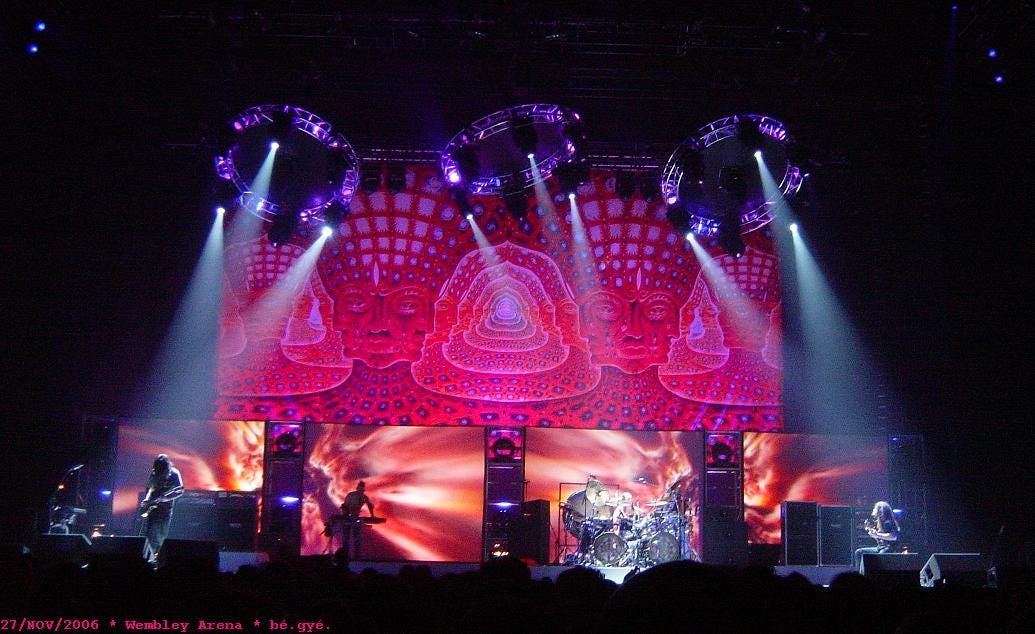
The album’s mood perfectly captured the mid-2000s zeitgeist. Following the 2004 re-election of George W. Bush and the deepening of the Iraq War, there was a cynical, heavy atmosphere in alternative culture. 10,000 Days leaned into this with tracks like “Right in Two” (a commentary on human divisiveness) and “The Pot” (a critique of political hypocrisy).
Compared to the optimistic “arena rock” of the time, 10,000 Days felt like a necessary, albeit grim, reality check. It was the “Thinking Person’s Rock Record” in an era of increasingly shallow pop-rock.
Twenty years on, 10,000 Days is no longer the “difficult follow-up.” It is the emotional anchor of Tool’s catalog. It proved that a band known for being cold and calculating could also be heartbreakingly human. It remains a master work of tension and release… a record that demands—and rewards—the kind of patience that is increasingly rare in the modern world.
The Album
Spotify:
Apple Music: https://music.apple.com/us/album/10-000-days/1474250650
The Videos
“Vicarious” live 2006
“Jambi” live
(Great example of Adam’s “talk box” solo)
“The Pot” live 2007
“Rosetta Stoned” Live from 2007
The Band
Be sure to check out the Audio Toxicity 2026 Bad Music Detox Protocol (AKA a playlist of songs covered so far…)