

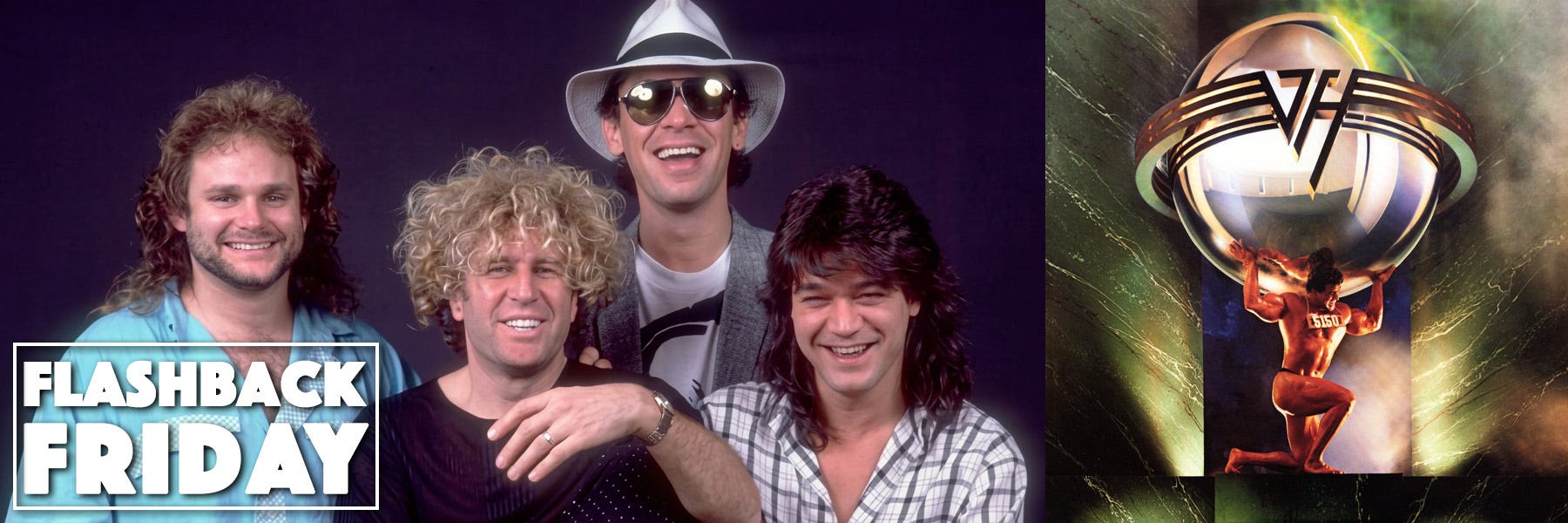
Forty years ago, on March 24, 1986, Van Halen did the impossible: they replaced the irreplaceable.
Retrospectively, 5150 is more than just an album; it was a high-stakes survival maneuver. Coming off the massive success of 1984, the departure of flamboyant frontman David Lee Roth felt like a death knell to many. Yet, 5150 didn’t just keep the band alive—it gave them their first-ever #1 album on the Billboard 200, a feat the original lineup had never achieved.
The introduction of Sammy Hagar into the mix changed the fundamental DNA of the band. Where Roth was a vaudevillian trickster who treated vocals as an extension of his persona, Hagar was a “musician’s singer”—a powerhouse vocalist who could also play a mean guitar.
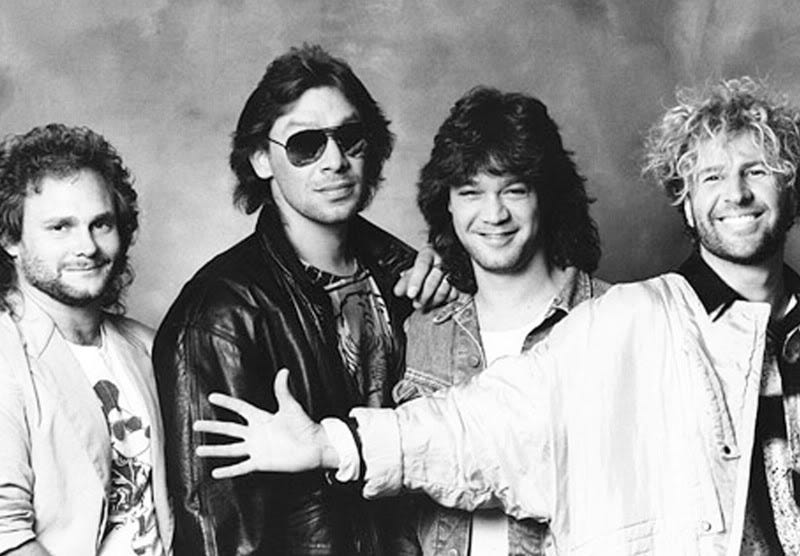
On paper, this had all the hallmarks of a good move… Hagar’s ability to play rhythm guitar allowed Eddie Van Halen to step away from his six-string and lean further into synthesizers (as seen in “Love Walks In” and “Dreams”). The “Diamond Dave” era was defined by suggestive double entendres and “party-rock” swagger. Hagar brought a more earnest, blue-collar sentimentality. For the first time, Van Halen was singing about “tried and true” love rather than just the “Hot for Teacher” variety. Finally, Songs like “Dreams” required a melodic, high-tenor vocal range that Roth simply didn’t possess. Hagar brought a raw, professional power that allowed the band to evolve into a more mature, stadium-filling force. But, would the fans get behind it?
Looking back four decades later, 5150 stands as one of the most successful “vocalist swaps” in rock history (even rivaling Brian Johnson joining AC/DC for 1980’s Back In Black). While the Roth years were arguably more groundbreaking and “cool,” the Hagar years were more musically diverse and commercially dominant. The album’s title itself—a California police code for a 72-hour psychiatric hold—symbolized the “insane” risk the band was taking (or perhaps why the change was necessary… Let’s be honest, as much as I like Dave, he’s always been a little batshit). Forty years on, it is clear that 5150 wasn’t a sign of madness, but a stroke of genius that kept one of rock’s most important legacies thriving well into the 1990s.
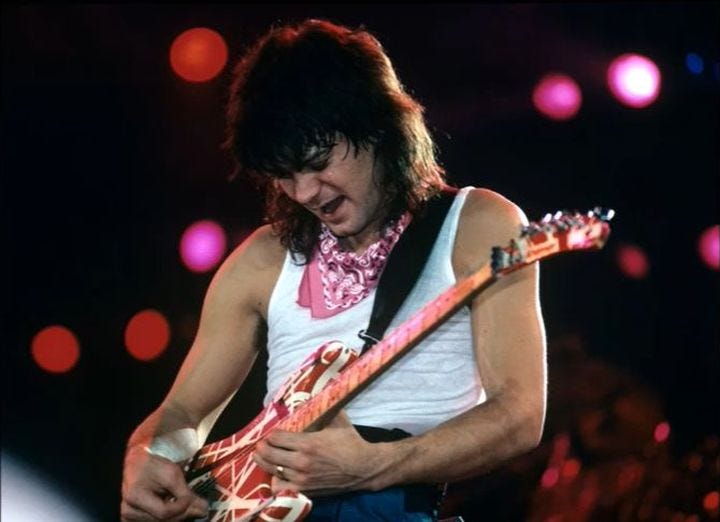
The album marked a significant transition in the band’s internal chemistry as well. Eddie Van Halen took more creative control than ever, moving further away from the raw, guitar-centric shreds of the late ‘70s toward a sophisticated, synth-heavy production style. Alex Van Halen provided a tighter, more processed drum sound that anchored the 80s aesthetic (The Simmons SDS-V series electronic drum sounds take center stage on this record), while Michael Anthony continued to be the band’s “secret weapon,” providing those soaring high-tenor harmonies that smoothed over the transition to a more radio-friendly sound.
The lead single, “Why Can’t This Be Love,” was a bold statement in a couple of ways… Opening with a synthesizer hook rather than a guitar riff, it signaled that “Van Hagar” was continuing the exploration into synths in their songwriting. The single also established, right out the gate, that the songs would be something different lyrically as well. Dave tended to focus on the downsides of love (What was Jamie doing? Crying. What do you do when your love interest doesn’t reciprocate? Might as well jump. You get the idea.), but Sammy was unafraid of love as a concept. Here’s a great clip of DLR talking with Joe Rogan and explaining the difference between their approach lyrically:
While the 5150 era of VH is dominated by the massive radio hits like “Why Can’t This Be Love,” “Love Walks In,” and “Dreams,” the album’s real depth—and its bridge to the band’s past—lies in the tracks that didn’t necessarily saturate the airwaves. These “hidden gems” are often the ones where the band sounds the most liberated and experimental.
“5150” (The Title Track, and my personal favorite)
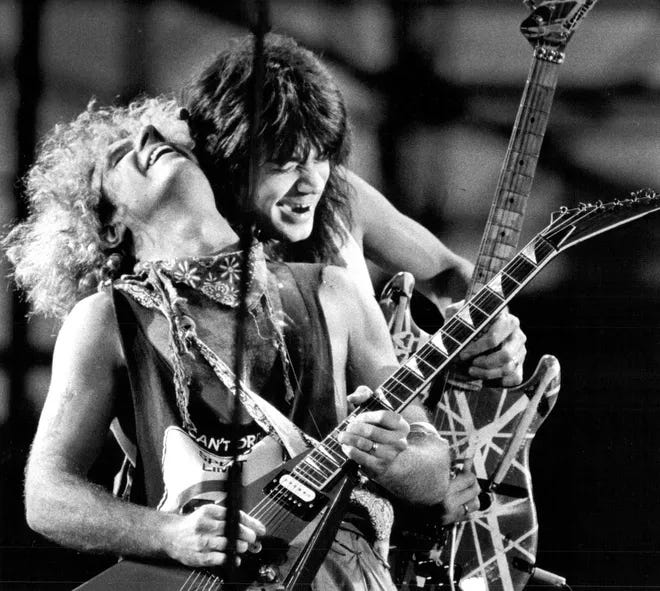
For the purists, the title track proved Eddie hadn’t lost his touch. It remains one of his most complex arrangements, featuring intricate tapping and a relentless drive that reminded everyone why he was the king of the six-string. While “Dreams” was the pop peak, “5150” is the guitar peak. It features some of Eddie’s most complex and progressive chord changes, shifting through rhythmic variations that feel almost mathy (or dare we say “proggy”?), yet the song still comes across as incredibly soulful. Fans (like me) often point to this as the “true” Van Halen moment on the record, where Eddie’s frantic, joyful energy proves that the change in singers didn’t dampen his technical fire. It’s nearly six minutes of pure adrenaline that rarely gets the “greatest hits” credit it deserves.
“Summer Nights”
This track is a masterclass in Eddie’s ability to weave a groove. Written using a Steinberger guitar (the headless, futuristic-looking one), it has a unique, “twangy” clean tone in the verses that feels loose and funky—a rarity for the Hagar era. It’s a quintessential “cool down” song that captures the atmosphere of a California evening. While it was a staple of the 1986 tour, it is often overlooked today in favor of the more popular keyboard-centric tracks.
“Get Up”
If you’re looking for the heaviest, most relentless moment on the album, this is it. “Get Up” is a frantic, high-speed rocker that features Alex Van Halen on a tear, utilizing a hybrid electronic/acoustic drum setup that gives the song a metallic, industrial punch. It’s one of the few songs on the record that retains the “dangerous” feeling of the David Lee Roth era, bordering on Metallica-esque thrash. It serves as a reminder that even in their new, polished form, the band could still clear a room if they wanted to.
“Inside”
As the album closer, “Inside” is the weirdest thing Van Halen had recorded up to that point. It’s an avant-garde, funk-inspired jam that sounds like a group of friends joking around in the studio (which they literally were). With spoken-word ad-libs and a “behind the scenes” feel, it was a polarizing track. To some, it felt like filler; to others, it was a refreshing glimpse into the band’s internal camaraderie after years of tension with Roth. It’s a “hidden gem” because it shows the band’s human side—messy, laughing, and unconcerned with perfection.
“Good Enough”
While it opens the album, it often gets overshadowed by the singles that follow. “Good Enough” is a classic boogie-rocker that features Sammy Hagar’s famous “Hello Baby!” intro. It’s significant because it’s the most “traditional” Van Halen song on the disc—the kind of track that could have easily existed on 1984. It proved right out of the gate that the band hadn’t forgotten how to throw a party.
At the time of its release, 5150 was a massive commercial juggernaut. Despite the skepticism of “Diamond Dave” loyalists, the album became Van Halen’s first Number 1 on the Billboard 200. Critics were divided—some missed the dangerous edge of the original lineup, while others praised the improved musicianship and songcraft.
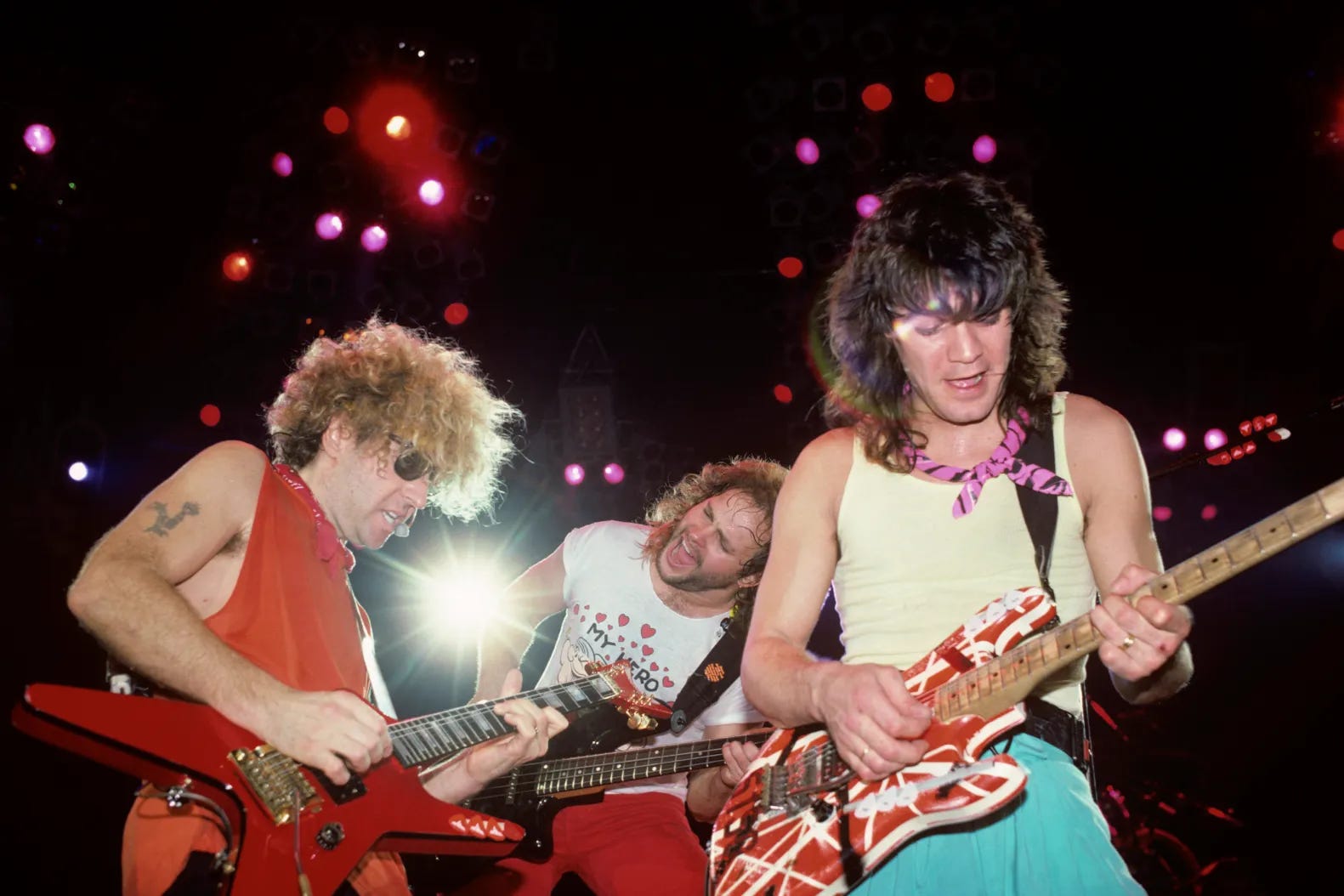
Culturally, 5150 defined the mid-to-late 80s “Arena Rock” era. It helped bridge the gap between heavy metal and mainstream pop, making Van Halen accessible to a much broader audience. It proved that a legendary band could lose its iconic frontman and not only survive but thrive. The “Van Hagar” era was born, and for a decade, it would dominate the airwaves, proving that the band’s core—Eddie’s genius—was adaptable enough to conquer any musical landscape.
Today, the band releases an expanded version of the record containing the 2023 remasters, additional remastered bonus tracks, and the complete 8/27/1986 show from New Haven, CT where a lot of the video footage came from. Bottom line… This is a great record and definitely worth a re-visit if you’re looking for an excuse to take a trip down memory lane.
The Album
Spotify:
Apple Music: https://music.apple.com/us/album/5150-expanded-edition/1873373091
The Videos
The Classic “Dreams” Blue Angels video
“Why Can’t This Be Love”
“Summer Nights” Live
“Best of Both Worlds” Live (upscaled to 4k)
The Band
Be sure to check out the Audio Toxicity 2026 Bad Music Detox Protocol (AKA a playlist of songs covered so far…)