

Flashback Friday : A Trick Of The Tail by Genesis
A Look Back At This Pivotal Release Half A Century Later
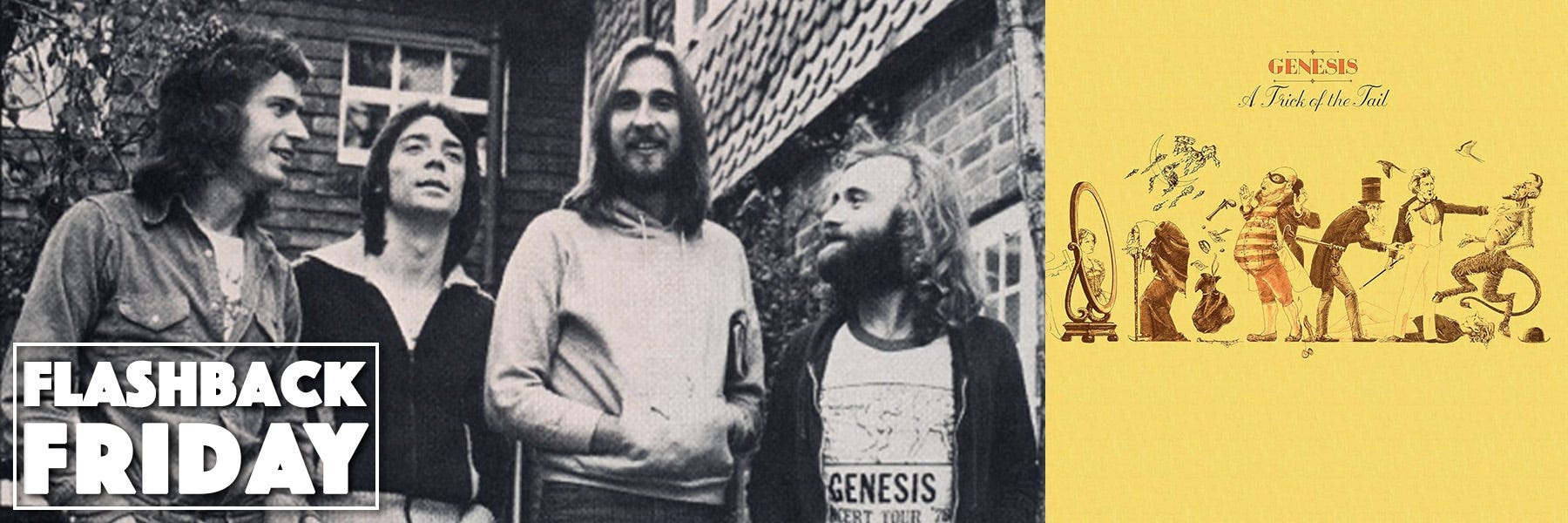
It’s hard to overstate the sheer “sink or swim” stakes surrounding Genesis in 1975… When charismatic frontman Peter Gabriel departed, the music press—and even some fans—had already begun writing the band’s obituary. The prevailing wisdom was that Gabriel was the band, and without his theatrical masks and surrealist lyrics, the remaining quartet would fade into progressive rock obscurity. Instead, A Trick of the Tail, released in early 1976, became the ultimate pivot point, proving that the band’s heart was not just in its spectacle, but in its collective songwriting.
The lineup for this record featured a leaner, highly motivated four-piece:
Tony Banks: The architect of the band’s lush keyboard textures and often complicated chord progressions.
Mike Rutherford: Providing the melodic bass lines and 12-string acoustic foundations.
Steve Hackett: Whose guitar work defined the “Genesis sound” in the early era.
Phil Collins: The powerhouse drummer who, after an exhaustive search for a new singer, stepped up to the microphone to change the course of music history.
The chemistry on this record is palpable. Without a singular “star” out front, the compositions became more democratic and shimmering. Tracks like “Dance on a Volcano” and “Los Endos” showcased a fusion-inspired complexity, while the title track and “Ripples” revealed a newfound knack for accessible, poignant storytelling.
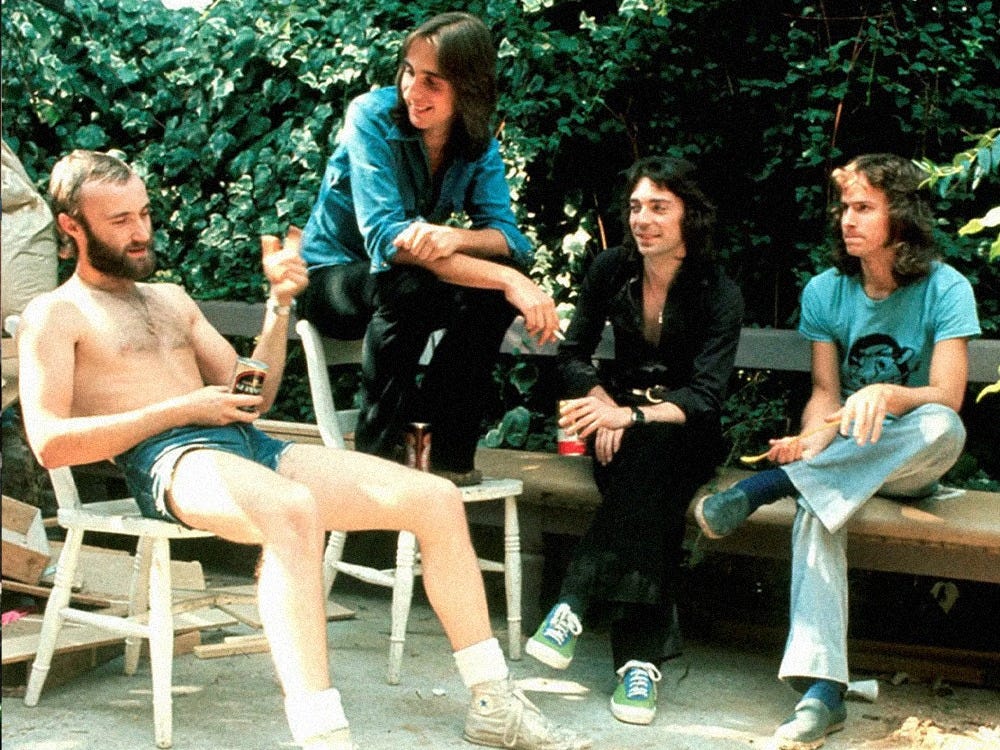
At the time of its release, A Trick of the Tail was a massive commercial triumph, actually outperforming Gabriel-era albums on the charts. It peaked at #3 in the UK and broke the Top 40 in the US, signaling that Genesis wasn’t just surviving—they were thriving.
Looking back half a century later, A Trick of the Tail stands as one of the most successful “Second Acts” in rock history. It is the bridge between the avant-garde experiments of The Lamb Lies Down on Broadway and the global pop dominance that would follow in the 1980s.
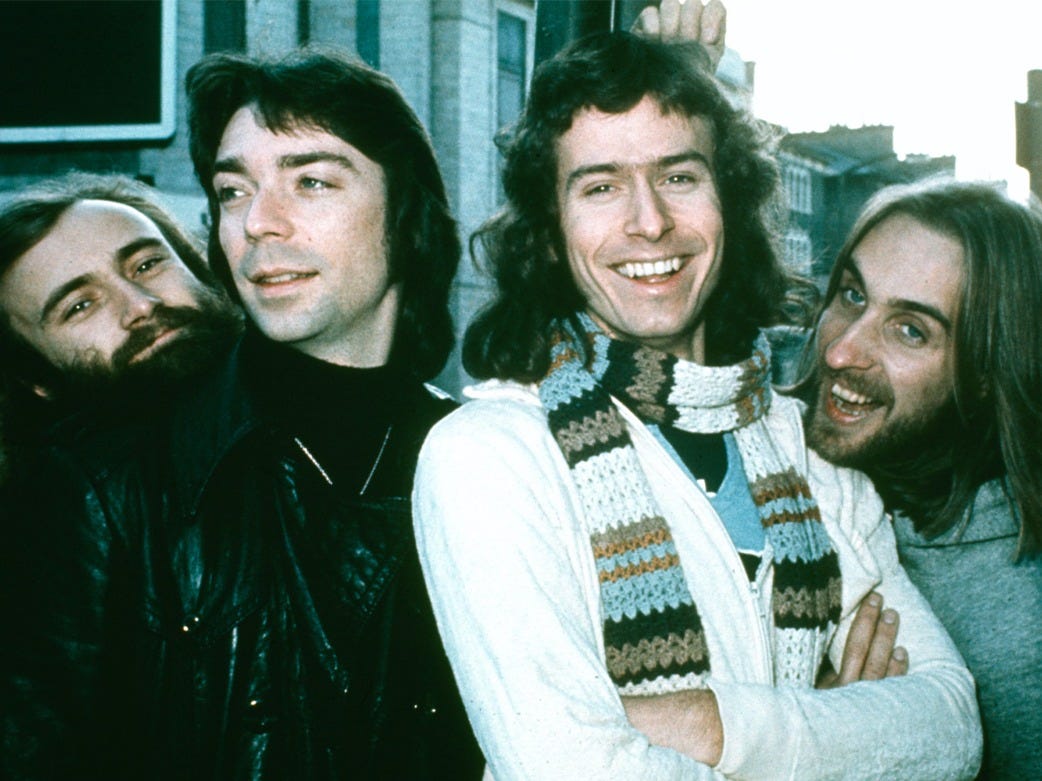
It remains a masterclass in creating atmosphere. Whether it’s the haunting Mellotron swells of “Entangled” or the frantic energy of “Squonk,” the album captures a band refusing to be defined by their past. It proved that Genesis was indeed the sum of its parts, and 50 years on, those parts still interlock with a precision and beauty that few of their peers ever matched.
The opening track, “Dance on a Volcano,” immediately signaled a change in energy. While The Lamb used a lot of distorted textures and “street” vibes, this track is founded in technical fusion, likely as a result of Phil beginning his active tenure in a “side-hustle” jazz-fusion band Brand X in 1975 once The Lamb shows wrapped up. It’s far more intricate and “mathy” than the previous record. The interplay between Phil’s drumming and Mike Rutherford’s bass is tighter and more aggressive, all while utilizing complex time signatures (shifting back and forth from 7/8 to 4/4) that feel controlled and shimmering rather than dark or claustrophobic.
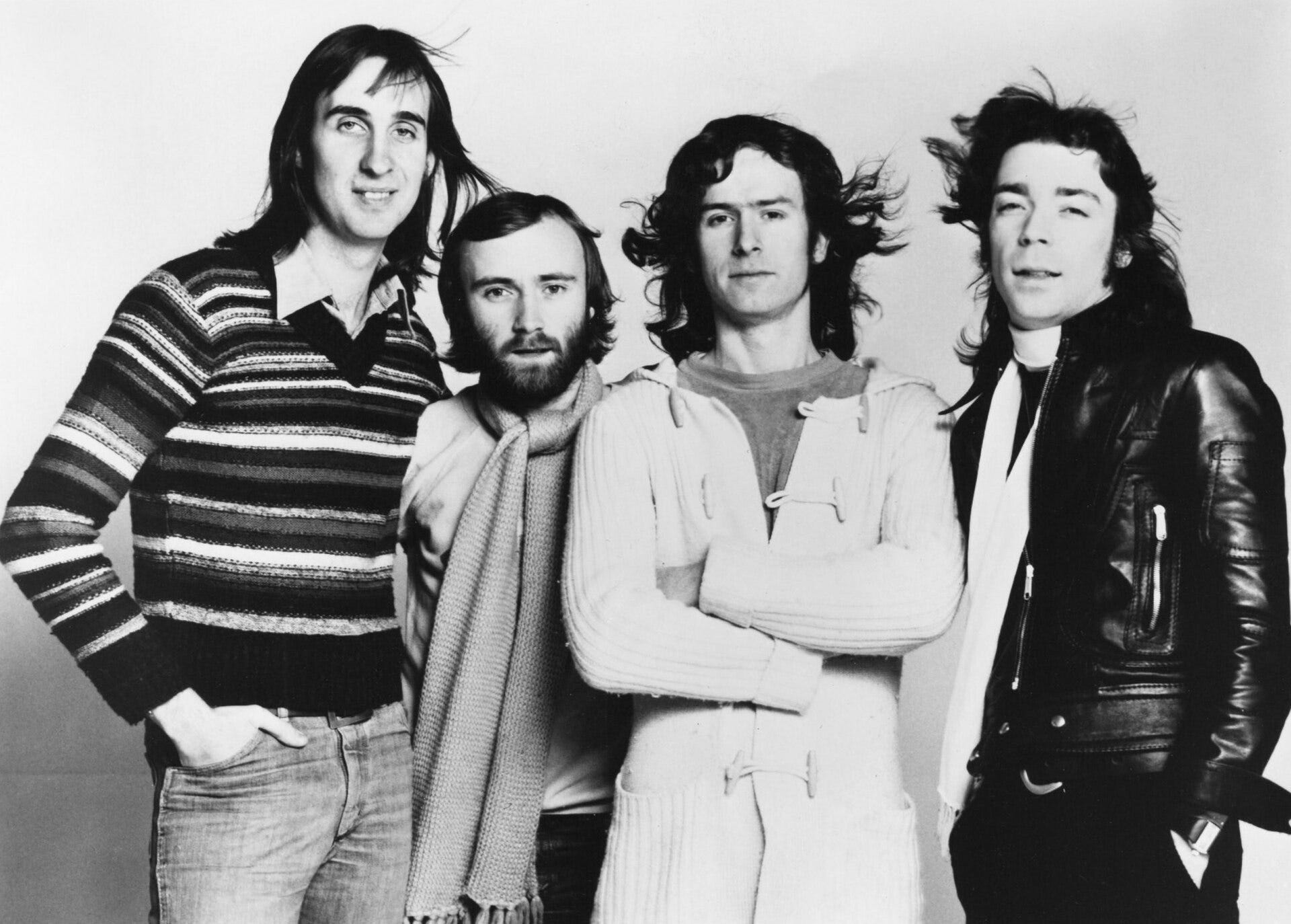
On previous records, Genesis’s “quiet” moments often felt eerie or medieval. On this album, songs like “Entangled” and “Ripples” brought a lush, cinematic beauty that was far more accessible. “Entangled” features a gorgeous 12-string acoustic guitar weave (a signature of Hackett and Rutherford) topped with Tony Banks’ ethereal Mellotron, making it feel dreamlike rather than theatrical. The other ballad “Ripples” is arguably the first sign of the balladry that would eventually make the band global superstars. It’s grand and sentimental, lacking the biting irony or bizarre character voices Gabriel often employed.
“Squonk” introduced a heavy, “Led Zeppelin-esque” drum sound that was entirely new for Genesis. Collins’ kit sounds massive here, providing a foundational “stomp” that replaced the busy, fluttering percussion of their earlier folk-prog days. The instrumental closer, “Los Endos,” serves as a stylistic manifesto. It reprises themes from “Dance on a Volcano” and “Squonk,” blending them into a jazz-fusion jam. This showed a band that was no longer subservient to a lyrical plot; they were letting the instrumental musicianship take center stage (something they had tried to do for a while but were continuously upstaged by Peter’s grand theatrics).
But, even with a well-crafted album in the can, they still faced a dilemma… Phil hadn’t originally intended to be the permanent frontman and couldn’t be a “stand-up” singer and a world-class drummer simultaneously. They needed a second drummer who could handle the intricate instrumental complexity and odd-time signatures while Phil focused on being the focal point of the stage. To solve the drumming dilemma for the Trick of the Tail tour, they reached out to Bill Bruford.
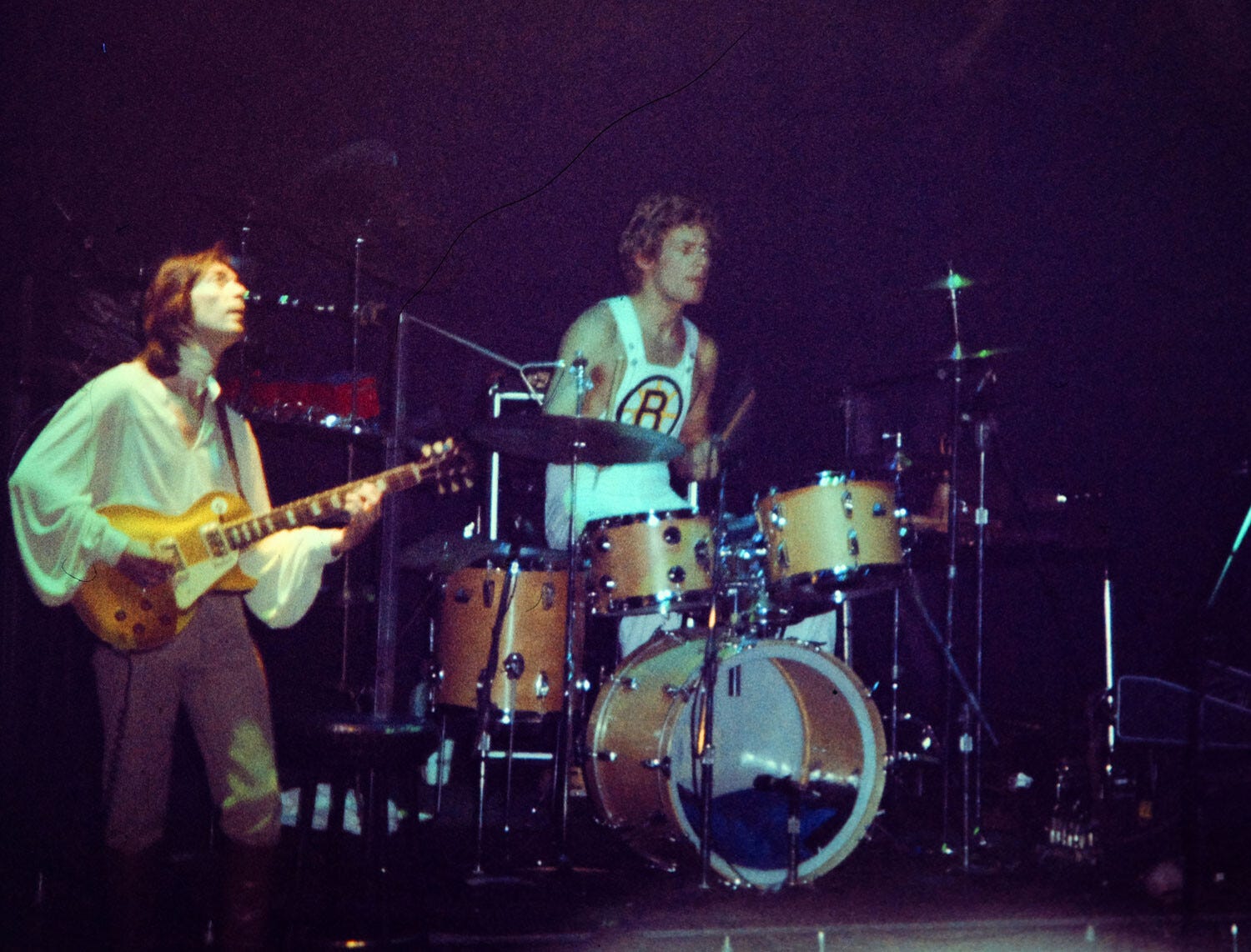
At the time, Bill Bruford was widely considered the gold standard for progressive rock drumming, having anchored both Yes and King Crimson. His involvement was a massive “get” for the band and provided instant credibility during a period of uncertainty. Bruford brought a jazz-influenced, crisp precision to the set and helped formulate and establish the “double drum” attack that became a hallmark of Genesis concerts for years to come.
It is a rare feat in rock history for a band to release even a single career-defining masterpiece, never mind two in one calendar year. Wind & Wuthering arrived in December 1976, and if A Trick of the Tail was the sound of a band proving they could survive, Wind & Wuthering was the sound of a band with the new-found confidence to push their musical complexity to its absolute limit. But more on that album, and the addition of Chester Thompson as their live drummer another time.
Ultimately, A Trick of the Tail was the definitive “proof of life” for Genesis, transforming a potential career-ending crisis into a creative rebirth that validated their identity as a collective rather than just a backing band for a charismatic frontman. By proving that Phil Collins could not only handle the vocal duties but also charm an audience with a more approachable stage presence, the album broke the band out of the cult-prog niche and into the commercial mainstream. The record’s success provided the financial and artistic confidence to embrace a tighter, more melodic sound, establishing the template for a dual-threat live show and a refined songwriting process that would eventually allow them to dominate the global charts for the next two decades.
The Songs
Official Videos:
Los Endos live (1976):
Los Endos again (1987)
Also Los Endos live (2007):
The Album
Spotify:
Apple Music: https://music.apple.com/us/album/a-trick-of-the-tail/73239685
The Band
Be sure to check out the Audio Toxicity 2026 Bad Music Detox Protocol (AKA a playlist of songs covered so far…)