

Flashback Friday: Black Love by The Afghan Whigs
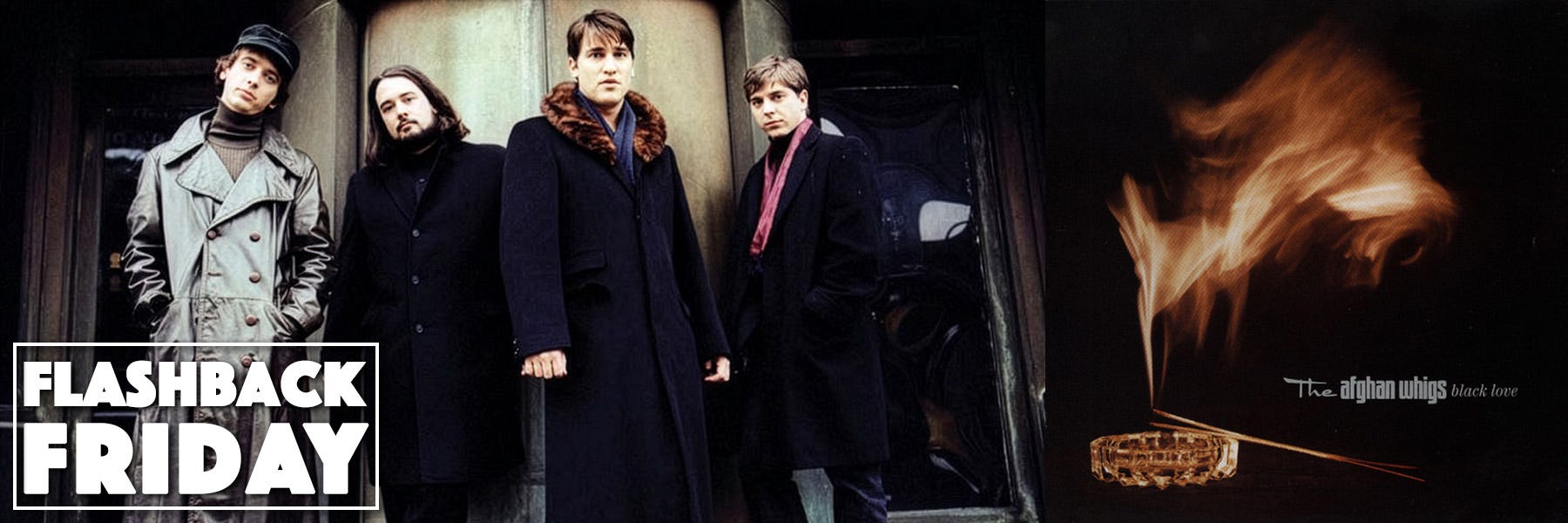
In March 1996, the Afghan Whigs released Black Love, an album that was initially greeted with a mix of critical bafflement and commercial “meh.” Arriving three years after their breakthrough masterpiece Gentlemen, it lacked that record’s radio-friendly angst. But 30 years later, Black Love has revealed itself not just as a sequel, but as the band’s most muscular, cinematic, and emotionally complex achievement.
By 1995, band leader and main creative force Greg Dulli was a man obsessed. He was deep into a period of clinical depression, which he combated by immersing himself in the murky world of roman noir. He was devouring the pulp fiction of Jim Thompson and James Ellroy, and obsessively rewatching the Coen brothers’ Blood Simple.
At the same time, the Whigs were evolving musically. They had a new drummer, Paul Buchignani, whose heavy, Keith Moon-esque swing gave the band a more expansive, “big room” sound. Dulli was also pivoting away from the Seattle-adjacent grunge label. He had even explored producing a noir film himself, and when the movie fell through, the songs he’d written for the soundtrack became the skeleton of Black Love.
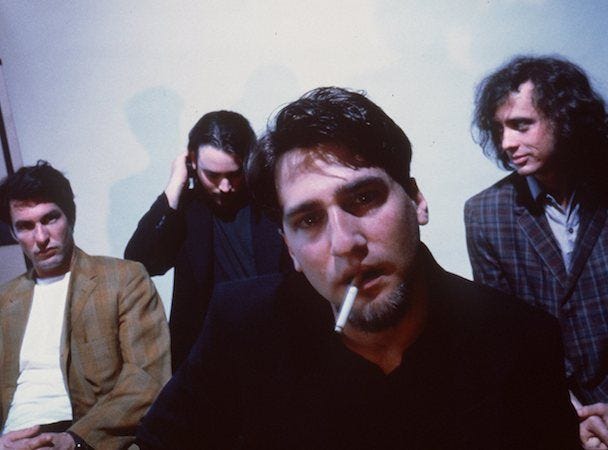
This cinematic intent is baked into the record’s DNA… It opens and closes with the sound of a train pulling into and out of a station, framing the 11 tracks as a linear narrative of betrayal, revenge, and—eventually—a very desperate kind of redemption.
In the mid-90s, the “Alternative” label had become somewhat of a sonic straitjacket of distorted guitars and mumbled vocals. The Afghan Whigs were the only band in that ecosystem with the audacity to act like they were signed to Stax Records in 1971. Black Love isn’t just rock; it’s Progressive Soul. “Blame, Etc.” is a feverish tribute to the Temptations’ David Ruffin. “Going to Town” is a sleazy, funk-inflected heist anthem. “Faded” closes the album as a sprawling, piano-driven gospel epic.
Culturally, the album was a middle finger to the irony of the era. While their peers were hiding behind “who cares” attitudes, Dulli was screaming about “deadly sins” and wearing velvet suits. They brought a sense of theatricality and carnal danger back to a genre that was becoming increasingly sanitized. This album, and the Whigs music in general made you feel more than just anger… and that was much more interesting to me at the time.
On Gentlemen, Dulli’s persona was that of the predatory narcissist—famously admitting he had a “dick for a brain.” In Black Love, that character has grown up and realized that his actions have consequences. The violence here is often internal. Musically, the evolution is staggering. The guitar interplay between Dulli and Rick McCollum on tracks like “My Enemy” is more jagged and aggressive than anything on their previous records, yet it’s balanced by John Curley’s soulful, grounded bass lines and lush layers of Fender Rhodes and clavinet.
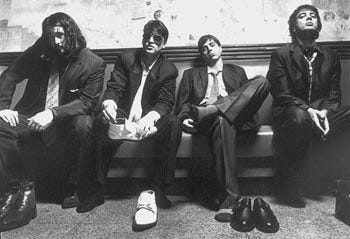
Black Love suffered in 1996 because it didn’t have a “Debonair” or a “Gentlemen”—it didn’t have a tidy three-minute single for MTV. It required—and still requires—the listener to sit in the dark and let the whole 52-minute movie play out. Three decades on, its “dark glamour” hasn’t dimmed. While much of the mid-90s post-grunge output feels dated, Black Love feels timeless because it’s rooted in the timeless: the blues, the Bible, and the back alleys of the human heart. It is the sound of a band reaching for something larger than a “hit”—they were reaching for a mythology.
To look at Black Love as a purely sober artistic endeavor would be to ignore the very “darkness” the title references. Greg Dulli has been candid in retrospective interviews about his history with substance abuse, specifically describing himself as a “raging alcoholic” and a “junkie” at various points during the 90s. While the “cocaine symphony” label is often applied more specifically to his later work with The Twilight Singers (specifically the album Powder Burns, but more on that record later in the year), the seeds of that chemical chaos were very much sown during the Black Love era.
The influence of drugs and alcohol on Black Love wasn’t just about the lyrics; it manifested quite noticeably in the very architecture of the sound. Dulli has noted that cocaine, in particular, creates a sense of “rhapsodic braggadocio.” You can hear this in the more aggressive, funk-metal tracks like “Honky’s Ladder” and “My Enemy.” There is a frantic, jagged energy to the guitar work and a vocal delivery that feels like it’s teetering on the edge of a breakdown—paranoia dressed up as confidence.
By 1996, Dulli’s voice had taken on a weathered, nicotine-and-whiskey grit that wasn’t as prevalent on their earlier Sub Pop records. On tracks like “Step Into the Light,” you can hear the physical toll of his lifestyle—the “slobbering” and raw vulnerability he would later reference when talking about his addiction. This “fire” is what gives Black Love its unique, burning intensity. It’s not a “downer” record; it’s a high-stakes, high-velocity exploration of a man who is “powering through a couple of dark days.”
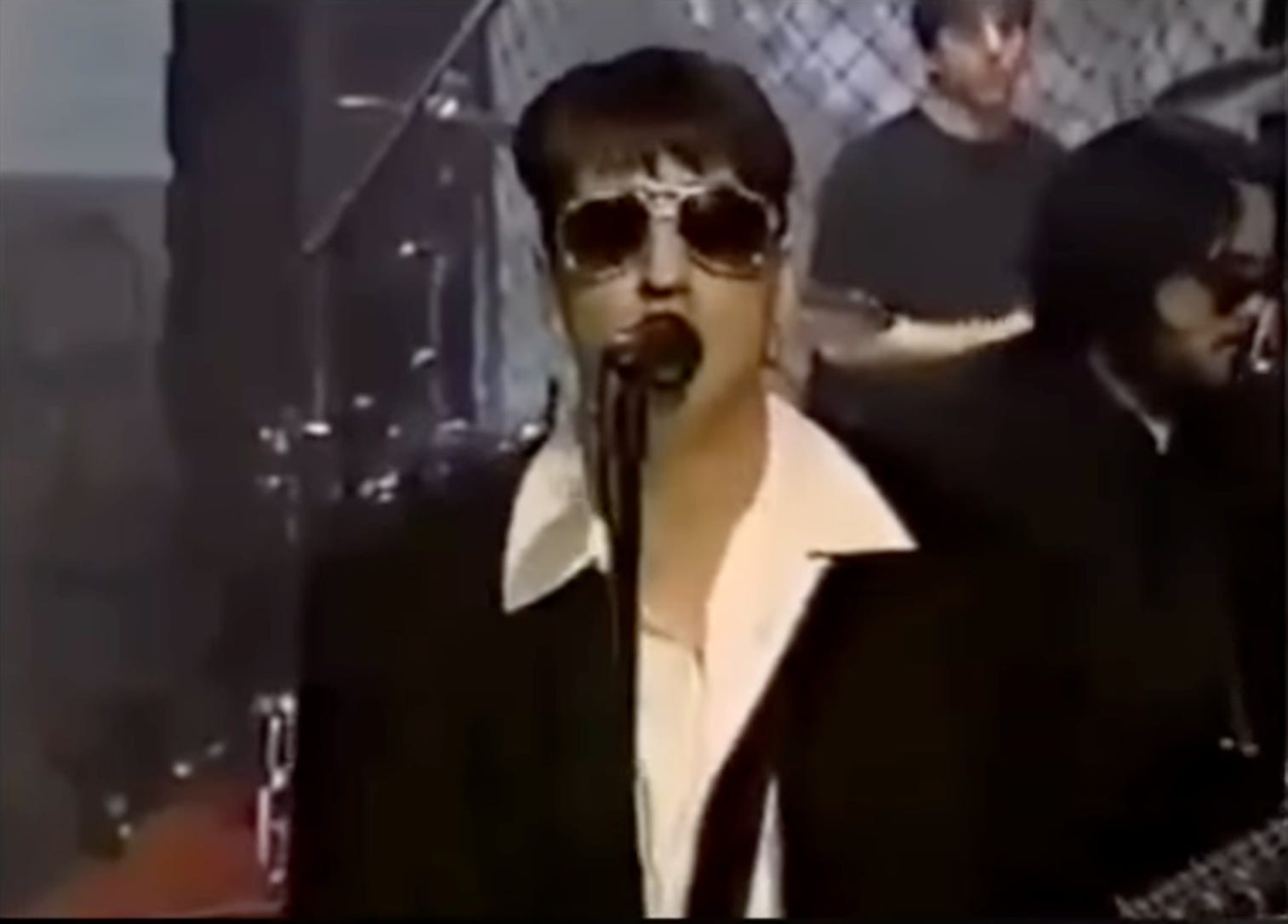
Ultimately, the drug use during this era contributed to the album’s reputation as the “darkest” in their catalog. It provided the desperation that makes the album’s final plea for redemption—the epic closer “Faded”—feel so earned and so haunting. In the mid-90s, Greg Dulli was the ultimate “odd man out” in the alternative rock landscape. While his peers were leaning into the slacker aesthetics of Grunge or the polished irony of Post-Grunge, Dulli was essentially auditioning to be the Otis Redding of the mosh pit.
Also, in 1996, rock lyrics were dominated by themes of being “the victim”—of society, of parents, or of fame. Dulli flipped the script. He pioneered the “Unreliable Narrator.” He wrote from the perspective of the villain, the cheater, and the addict. He wasn’t asking for your pity; he was showing you his scars and his sins with a smirk. This gave him a “noir” credibility that made him feel more like a peer to Nick Cave or Leonard Cohen than to Gavin Rossdale.
Dulli’s style was also geographically distinct. Coming from Cincinnati, he was insulated from the Seattle sound. He was closer to the funk of Dayton and the soul of the Midwest. Stylistically, Dulli was a bridge… He connected the raw power of 70s hard rock with the emotional theatricality of 60s soul and the cinematic grit of 40s film noir. He was too “rock” for the R&B charts and too “soul” for the rock charts—which is exactly why Black Love sounds so unique (and so good) 30 years later.
The Album
Spotify:
Apple Music: https://music.apple.com/us/album/black-love-20th-anniversary-edition/1163812501
The Videos
“Going To Town” official Video
“Blame Etc.” Live on MTV 120 Minutes
“My Enemy” live
“Summer’s Kiss” (Pro Shoot from 2012)
“Faded” Live from Germany
The Band
The 1996 line-up:
Greg Dulli (vocals, rhythm guitar)
Rick McCollum (lead guitar)
John Curley (bass)
Paul Buchignani (drums)
(only Dulli and Curley remain in the current 2026 line-up)
Be sure to check out the Audio Toxicity 2026 Bad Music Detox Protocol (AKA a playlist of songs covered so far…)