

Flashback Friday: Master of Puppets by Metallica
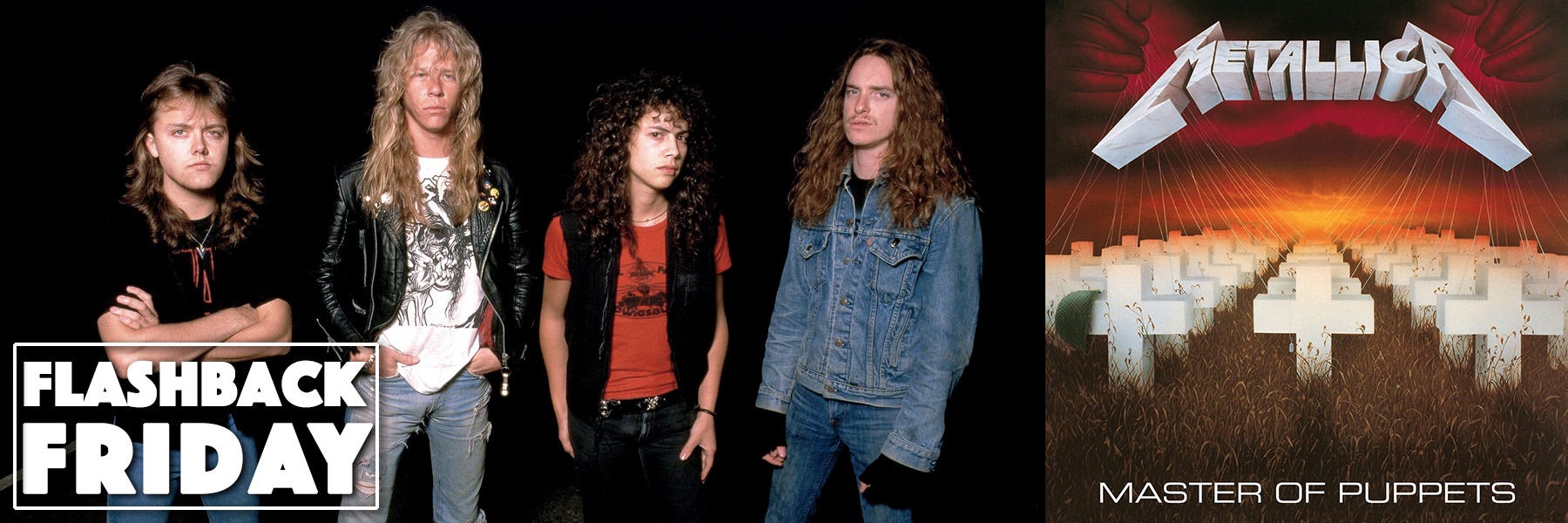
Forty years after its explosive release on March 3, 1986, Metallica’s Master of Puppets stands as an unassailable colossus in the pantheon of heavy metal. In the dim, Reagan-era haze of the mid-1980s, when hair metal was sashaying into the mainstream and punk was sputtering out, this album arrived like a Molotov cocktail hurled into the heart of rock ‘n’ roll complacency.
Produced by Flemming Rasmussen at Sweet Silence Studios in Copenhagen, it was the band’s third studio effort, following the raw fury of Kill ‘Em All (1983) and the ambitious sprawl of Ride the Lightning (1984). Clocking in at 55 minutes, Master of Puppets refined thrash metal’s blueprint into something both ferociously aggressive and intellectually sophisticated—a record that didn’t just get you pumped, but also make you think by waging war on conformity, addiction, and societal control. Today, in 2026, as Metallica continues to tour arenas and drop polished latter-day albums like 2023’s 72 Seasons, revisiting Puppets feels like unearthing a time capsule of youthful rage that’s aged like fine whiskey: sharper, more potent, and eternally relevant.
Editor’s Note: At the time this album was released I was NOT a fan of Metallica, Slayer, or any other thrash metal band, being firmly planted in the Prog Rock camp I just didn’t “get it.” Instead, I was neck deep in Genesis, Yes, Pink Floyd, Peter Gabriel and Frank Zappa and will admit that I looked down on this kind of music. I did make a proactive attempt to engage again when …And Just For All came out but it didn’t take. It wasn’t until the self-titled “Black Album” came out that the band offered me an opening to their music I could actually fit through. I was able to hone a new appreciation for their earlier works and have stuck with them up through their latest, 72 Seasons. So. I wasn’t an OG here, and don’t want to claim that I was.
At its core, Master of Puppets is a thrash metal triumph, blending blistering speed with intricate songcraft that demands repeated listens to unpack its layers. The title track is a beast—an eight-and-a-half-minute juggernaut that kicks off with James Hetfield’s chugging riffage and Lars Ulrich’s solid drumming, building to a sludgy, half-time breakdown that evokes the strings of a marionette being jerked by invisible forces.
Hetfield’s lyrics, delivered in his signature bark, dissect the puppeteers of power:
“End of passion play, crumbling away / I’m your source of self-destruction.”
It’s not subtle, but that’s the point—thrash was never about nuance; it was about catharsis.
The album’s diversity shines in tracks like “Battery,” the ferocious acoustic-to-full-throttle intro that sets a template for dynamic shifts still emulated today, and “Disposable Heroes,” a Vietnam-era anti-war screed that’s equal parts Born on the Fourth of July and Black Sabbath heaviness. “Welcome Home (Sanitarium)” slows the pace for a haunting, Pink Floyd-esque exploration of institutional madness, with Kirk Hammett’s wailing leads cutting through the brain-fog. Instrumental standout “Orion” is probably the only song on the record that could have converted me into a fan at the time (had I heard it)—a nearly nine-minute prog-metal odyssey that showcases the band’s growing virtuosity, from Cliff Burton’s orchestral bass solo to the symphonic interplay of guitars. It’s a far cry from the rudimentary thrash of their debut, proving Metallica could evolve without selling out.
“Leper Messiah” skewers televangelists with biblical fire, while “Damage, Inc.” closes the album with a no-holds-barred assault, its lyrics a manifesto for self-annihilation amid societal decay. Production-wise, Rasmussen’s crisp sound—tight drums, roaring guitars, and Hetfield’s intelligible snarls—elevated thrash from garage grit to stadium-ready polish. No synths, no frills; just four Bay Area misfits channeling influences from Motörhead, Diamond Head, and other “NWoBHM” pioneers into something uniquely American and apocalyptic.
Master of Puppets wasn’t just an album; it was a cultural earthquake that defined thrash metal’s golden age and reshaped rock’s rebellious ethos. Released amid the Cold War’s tail end, the War on Drugs, and the rise of yuppie excess, its themes of manipulation, addiction, and dehumanization resonated with a generation feeling squeezed by Reaganomics and moral panics. Thrash metal, born in the underground scenes of San Francisco and New York, was the antidote to glam’s hairspray and pop’s polish—raw, fast, and unapologetic in its critique of authority.
The album’s impact rippled far beyond metal. It became a rite of passage for misfits, much like The Clash’s London Calling for punks or Nirvana’s Nevermind for grunge kids a decade later. Sales-wise, it peaked at No. 29 on the Billboard 200 initially but has since gone platinum six times over, with over 6 million copies sold in the U.S. alone by 2026 estimates. Its anti-drug stance gained tragic irony when Burton died in a 1986 tour bus crash just months after release, cementing the band’s lore and prompting Jason Newsted’s arrival.
Master of Puppets sits at the apex of Metallica’s “classic era,” a critical milestone in their 40-plus-year evolution from garage thrashers to the biggest metal band on the planet. Their debut Kill ‘Em All was a snot-nosed declaration of speed-metal anarchy, all venom and little finesse. Ride the Lightning expanded horizons with ballads like “Fade to Black” and the electric-chair epic “The Call of Ktulu,” hinting at prog ambitions. But *Puppets* synthesized it all: the aggression of the first, the experimentation of the second, and a songwriting maturity that made them peers to Iron Maiden or Judas Priest.
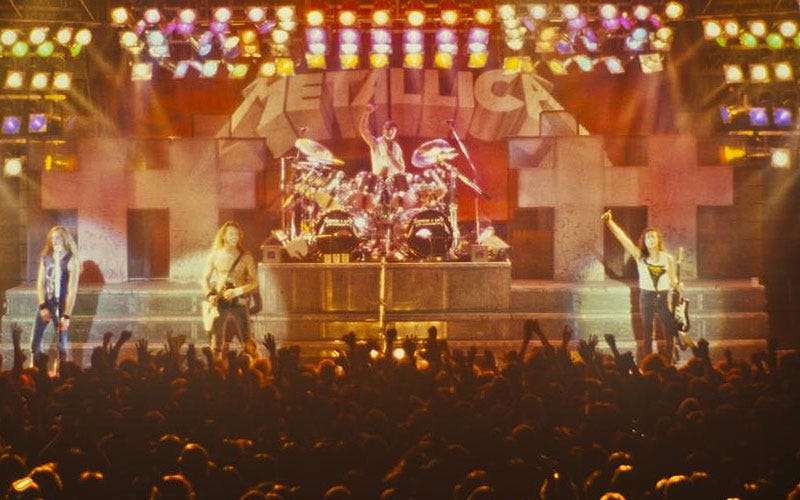
In retrospect, Puppets was the last pure thrash statement before Metallica’s pivot to mass appeal. It captured them at 22-23 years old, hungry and unscarred, before fame’s puppet strings pulled them toward experimentation and excess. Without it, the Black Album’s success might’ve rung hollow; it’s the foundation proving they could write epics that endure. Today, as Hetfield (62) and co. headline festivals and book an extended residency at the Sphere in Las Vegas, Puppets symbolizes their uncompromising core—It isn’t just great; it’s essential. In Metallica’s arc from underground heroes to elder statesmen, it’s the unblemished peak—a reminder that at their best, they cut the strings of expectation. If you’re new to metal, start here; if you’re a vet, spin it loud and raise a fist to the masters in celebration of its 40th anniversary. Long live the puppets who broke free.
The Album
Spotify:
Apple Music: https://music.apple.com/us/album/master-of-puppets-deluxe-box-set/1275819392
The Videos
“Master of Puppets” live from Japan featuring Cliff Burton on bass in 1986:
“Master of Puppets” live in 1989 with Jason Newstead on bass and upcycled into 4k (very cool!):
The Band
Be sure to check out the Audio Toxicity 2026 Bad Music Detox Protocol (AKA a playlist of songs covered so far…)