

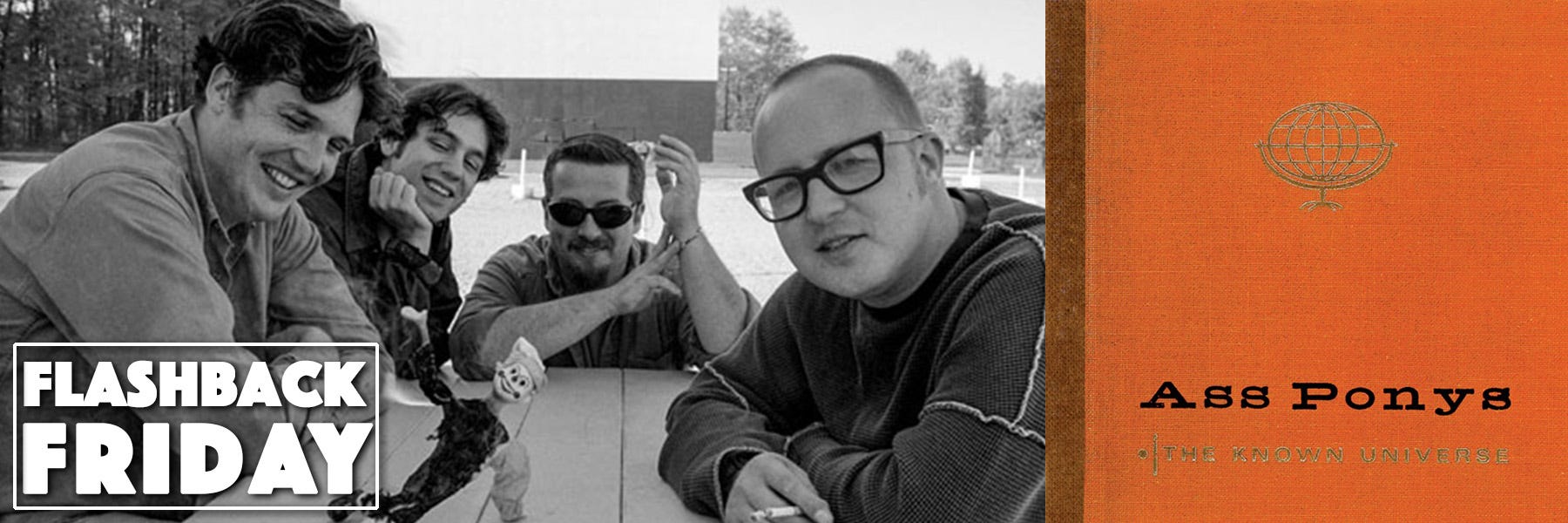
In the mid-1990s, the “post-Nirvana“ major label feeding frenzy was in full swing, and A&M Records—searching for the next weird thing—found it in a group of Cincinnati stalwarts called the Ass Ponys.
Now, thirty years after the April 1996 release of their second major-label effort, The Known Universe, the album stands as a fascinating artifact of a time when “alternative” music was still allowed to be genuinely eccentric, uncomfortably local, and deeply human.
Produced by John Curley of The Afghan Whigs, The Known Universe is the sonic midpoint between the band’s scrappy garage-folk origins and the more polished, emotionally resonant work frontman Chuck Cleaver would later produce with Wussy.
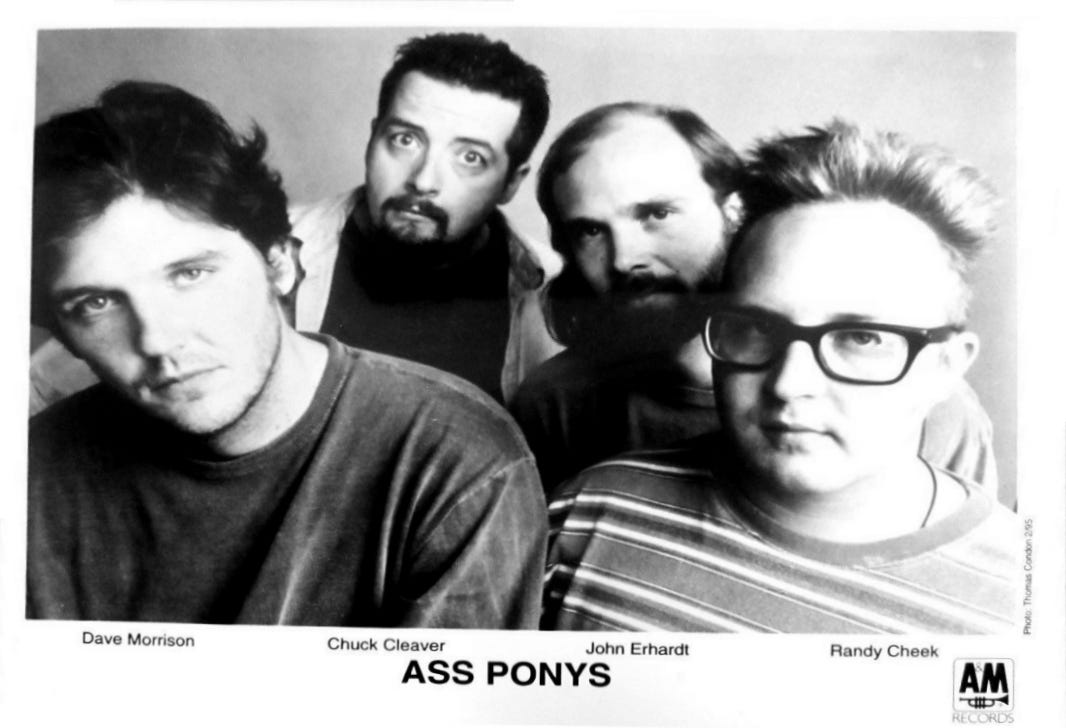
The album is anchored by Cleaver’s distinctive, high-pitched “corkscrew” falsetto—a voice that feels perpetually on the verge of either a breakdown or a breakthrough. Musically, it’s a tight, semi-acoustic affair. Standout tracks like “And She Drowned” and “Shoe Money” feature a chunky, melodic drive. Cleaver’s dark-humor infused songwriting doesn’t just tell stories; it creates dioramas of Midwestern life, filled with “normal freak show” details often accompanied by alt-country elements of pedal steel and folk-rock arrangements that lean into the “Old, Weird America” aesthetic.
By 1996, the grunge movement was beginning to atrophy into the polished “post-grunge” sound. The Known Universe stood in stark opposition to this. It wasn’t interested in being cool or “heavy” in a traditional sense. Instead, it was culturally significant for contributing to the “Cincinnati Scene.” Alongside The Afghan Whigs, the Ass Ponys proved that Cincinnati was a hub for a specific kind of literate, gritty, and soulful rock that didn’t need to sound like Seattle or New York.
It represents a brief (hopeful) window in music history where a band named “Ass Ponys”—singing about 75-word existential despairs and eccentric grandmothers—could get a massive distribution deal. It helped bridge the gap between 80s college rock (think early R.E.M.) and the burgeoning alt-country movement of the late 90s, prioritizing storytelling over genre tropes.
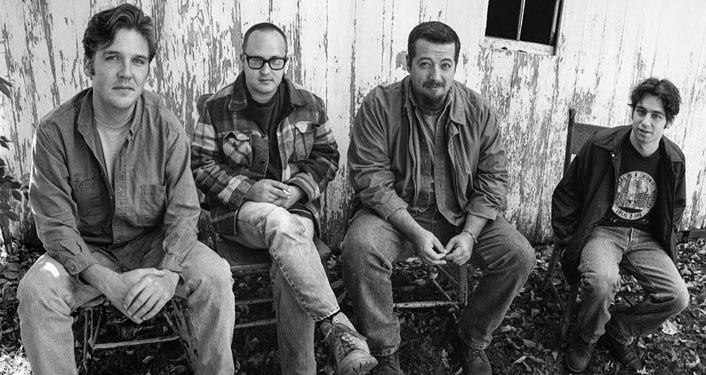
Retrospectively, The Known Universe is the moment where Chuck Cleaver truly sharpened his pen. While the band’s earlier work was often dismissed as “quirky” or “humorous,” this record began to reveal the “sullen grace” that would define Cleaver’s later career and hasn’t aged a day, mostly because it never tried to be “trendy” in the first place. It remains a shining example of Midwestern Gothic songwriting—equal parts funny, disturbing, and heart-wrenching.
While Chuck Cleaver is the undisputed face of the Ass Ponys, The Known Universe is a definitive “ensemble” record. By 1996, the band had transitioned from a loose collection of Ohio friends into a sophisticated, telepathic unit with Cleaver the primary architect of the album’s lyrical world. On The Known Universe, his writing shifted from the purely bizarre to a more grounded, literary “Midwestern Gothic.” His vocal delivery on tracks like “God Tells Me To” is iconic—strained, high-pitched, and filled with a nervous energy that perfectly mirrored the undercurrent of quiet anxiety rippling through the 90s.
Often described as the band’s secret weapon, Randy Cheek (who sadly passed away in 2024) provided much more than just a low end. On the track “Under Cedars and Stars,” Cheek actually provided the lyrics. His writing style was slightly more ethereal and poetic than Cleaver’s, providing a beautiful contrast. His playing was never just “thumping”; it was highly melodic and often carried the hook of the song as much as the guitar did.
Guitarist Bill Alletzhauser joined just in time for this record, replacing original guitarist John Erhardt. His arrival fundamentally changed the band’s texture by bringing a more layered, atmospheric approach to the guitar work. His use of slide guitar and banjo (as heard on “Hagged”) helped cement the “alt-country” label that was beginning to follow the band. He is credited as a co-composer across the entire record, signaling a shift toward a more collaborative writing process compared to their early garage-rock days.
Dave Morrison provided the steady, often understated heartbeat of the album. The Known Universe required a drummer who could pivot from the driving indie-rock of “Shoe Money” to the delicate, brush-work feel of the album’s quieter moments. Morrison also handled keyboard duties, adding the subtle swells and textures that made this record feel more “produced” and “universal” than their previous lo-fi outings.
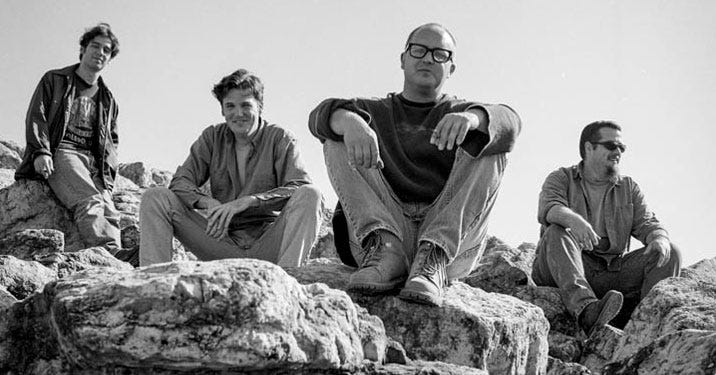
You cannot talk about the sound of this era without mentioning producer John Curley (bassist for The Afghan Whigs). Curley recorded the album at his Ultrasuede Studios in Cincinnati and helped the band capture a “cleaner” sound without sacrificing their grit. He was instrumental in making Cleaver’s vocals “decisively legible”—allowing the intricate storytelling to sit right at the front of the mix.
If Electric Rock Music (released in 1994 and is definitely worth a listen) was their “hit” record (thanks to “Little Bastard”), The Known Universe was their “writer’s” record. It laid the groundwork for the emotional maturity found in their final albums, Some Stupid with a Flare Gun (great title) and Lohio, and eventually provided the DNA for Wussy, which some critics now consider one of the best American bands of the 21st century.
The Album
Spotify:
Apple Music: https://music.apple.com/us/album/the-known-universe/1502495478
The Videos
“God Tells Me To”
TEDx Talk performance… Has absolutely nothing to do with this record but is an interesting artifact none-the-less:
The Band
There does not seem to be a dedicated website anymore but here is some info:
https://www.onamrecords.com/artists/ass-ponys
Be sure to check out the Audio Toxicity 2026 Bad Music Detox Protocol (AKA a playlist of songs covered so far…)