

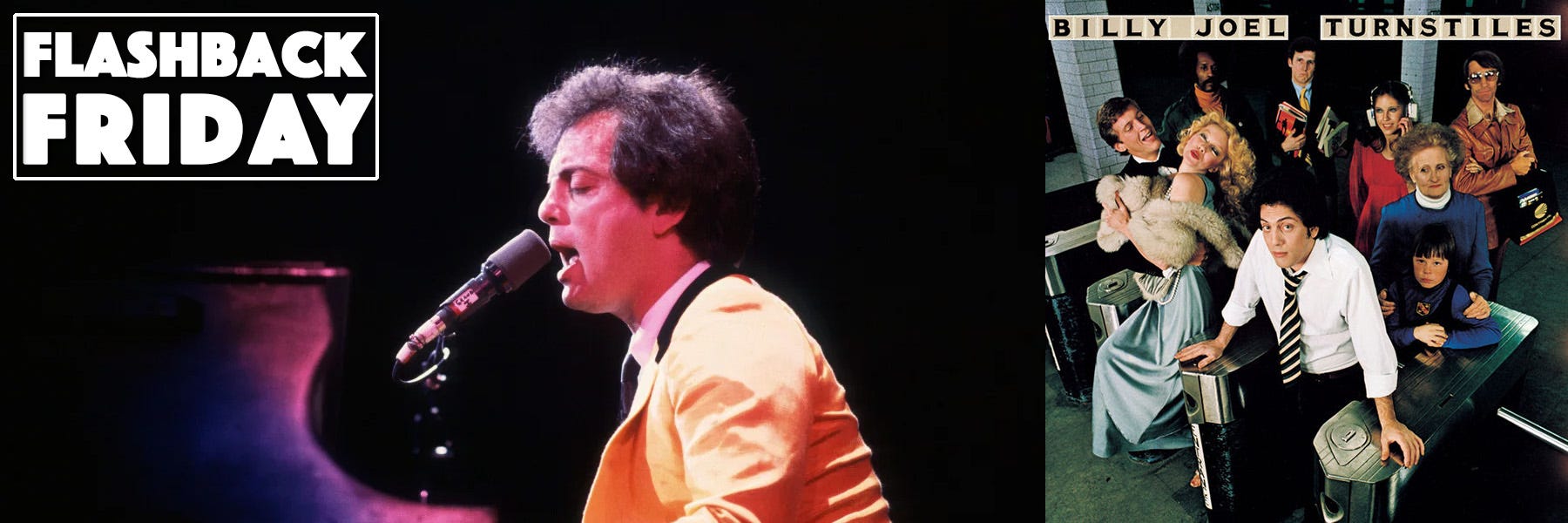
Released on May 19, 1976, Turnstiles stands as the definitive pivot point in Billy Joel’s career—the moment he stopped trying to be a “West Coast” singer-songwriter and reclaimed his identity as a New Yorker. Joel had spent the early 1970s in Los Angeles, a period that yielded the masterpiece “Piano Man” but also left him feeling like a creative expatriate. His previous album, Streetlife Serenade (1974), was a cynical, often bitter look at the music industry and West Coast superficiality.
This record was his homecoming, a sophisticated blend of blue-eyed soul, Broadway-esque theatricality, and straight-ahead rock that finally captured the cinematic scope of his ambition. He had grown weary of the L.A. scene—a sentiment he bitingly captured in the album opener “Say Goodbye to Hollywood.”
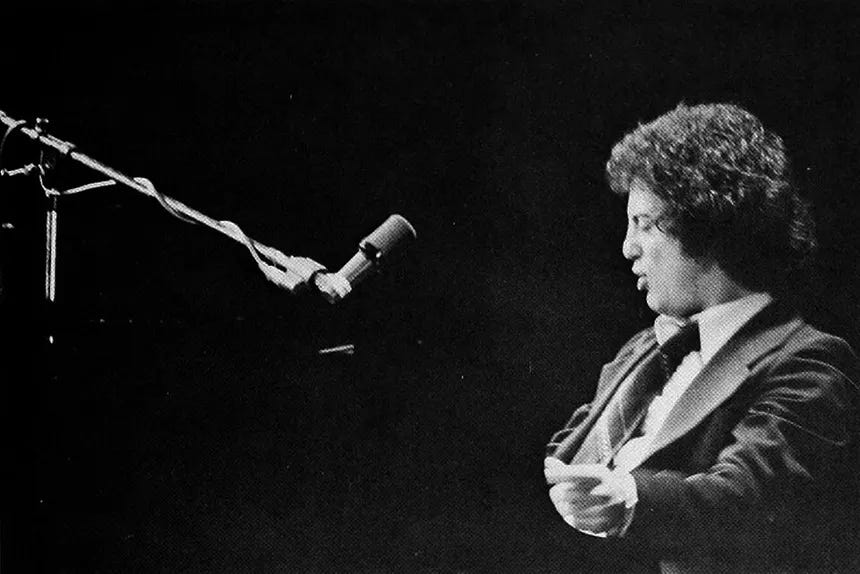
He realized that his creative wellspring was tied to the grit, the seasons, and the pace of the East Coast. He didn’t just move back to New York; he reclaimed his name and his sound, turning the frustration of his California “exile” into the fuel for his most legendary run of albums.
Side Note: The 2025 HBO documentary “Billy Joel: And So It Goes” did a good job summarizing the events that lead up to his move to LA and eventual return to NY, so I’ll focus more on the album itself and less on the peripheral goings-on that led to the move to LA and eventual return.
Turnstiles was the sound of Joel unpacking his bags. The album’s cover—shot in the Upper West Side’s 72nd Street subway station—features Joel surrounded by a motley crew of characters representing the diverse songs on the record. It was a visual manifesto: he was back in the city, and he was prepared to start telling its stories.
The album opens with “Say Goodbye to Hollywood,” a Wall of Sound-inspired tribute to Ronnie Spector and the Drifters. It was a bold declaration that Joel was moving away from the “James Taylor” acoustic aesthetic and toward a more muscular, orchestral pop sound. The album also includes the song that has become New York City’s unofficial anthem: “New York State of Mind.” Fifty years later, it is impossible to imagine the American Songbook without it, and also signaled a shift in Joel’s writing toward the “Standard”—songs that felt like they had existed forever.
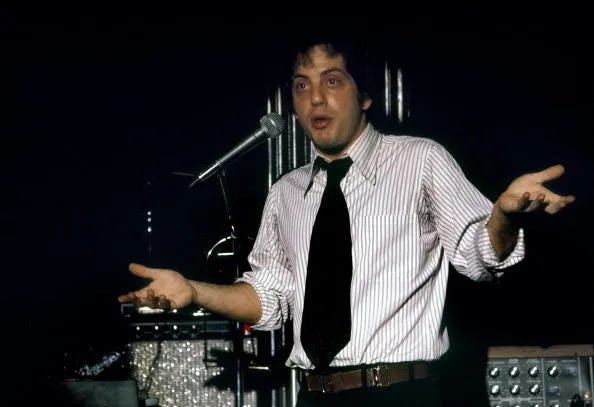
However, the album’s emotional core lies in “Summer, Highland Falls.” Often cited by Joel himself as one of his best works, the song explores the “sadness or euphoria” of the human condition over a complex, cascading piano line. It showcased a psychological depth that proved Joel was more than just a pop tunesmith; he was a philosopher of the mundane.
Other tracks like “Miami 2017 (Seen the Lights Go Out on Broadway)” proved Joel’s prescience. A dystopian sci-fi epic about the collapse of New York, it became a rallying cry for the city during the fiscal crisis of the late ‘70s and again after the events of 9/11 and Hurricane Sandy.
The album’s creation was born out of a necessary rebellion. Joel had initially recorded the tracks with producer James William Guercio and the Chicago session musicians at Caribou Ranch, but he found the results lacked soul. In a bold move, he scrapped the tapes, took over production himself, and brought in his own touring band—the “Lords of 52nd Street.” This decision was crucial as it transformed the music from what was essentially a solo project into a cohesive, band effort.
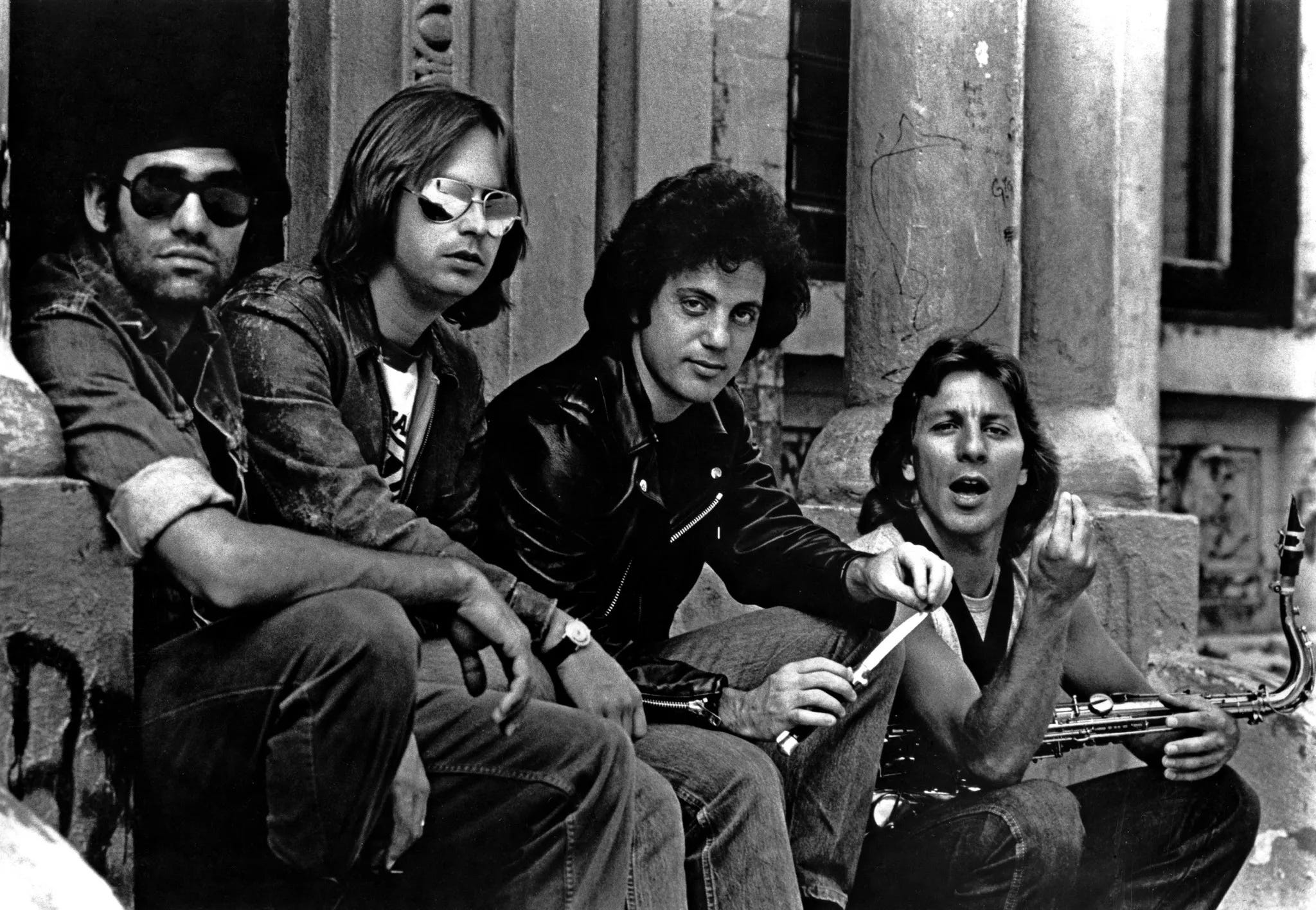
Turnstiles is the first time we truly hear the legendary lineup that would define Joel’s “classic” era. Their chemistry was forged in the bars and clubs of Long Island, providing a grit that polished session players couldn’t replicate. Drummer Liberty DeVitto is (as always) the backbone of the record, DeVitto’s aggressive, high-energy drumming drove tracks like “Angry Young Man,” providing a rock-and-roll edge to Joel’s complex piano arrangements.
On bass, Doug Stegmeyer provided the melodic “glue” and a solid R&B pocket, particularly evident on the reggae-influenced “All You Wanna Do Is Dance.” Richie Cannata’s contributions on sax cannot be overstated. Cannata provided the iconic, soaring saxophone solo on “New York State of Mind,” a performance that instantly transformed the song into a timeless standard.
At the time of its release, Turnstiles was not an immediate commercial juggernaut. It peaked at a modest #122 on the Billboard 200, and many critics were initially unsure how to categorize its genre-hopping nature. However, it smoldered into a “sleeper” hit that built immense word-of-mouth momentum. Culturally, it signaled the end of the “sensitive 70s troubadour” era and helped usher in the era of the sophisticated, urban pop-rock star.
The record also served as a profound love letter to a New York City that was, at the time, struggling with bankruptcy and high crime. By romanticizing the city in “New York State of Mind” and “Summer, Highland Falls,” Joel gave the region a renewed sense of pride. Today, the album is viewed by fans and historians alike as the “creative bridge” that allowed Joel to refine his sound before exploding into global superstardom with his next effort, The Stranger.
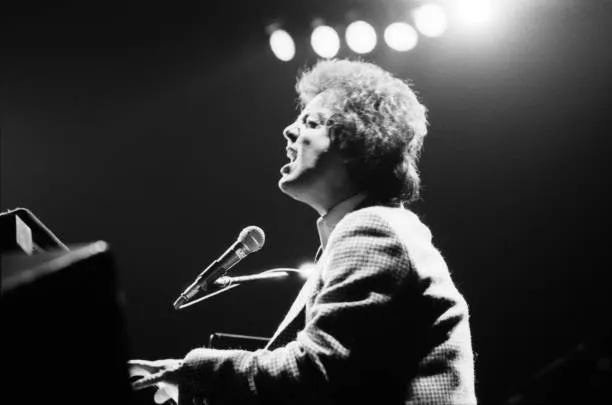
The album’s impact on Joel’s future was cemented when producer Phil Ramone attended one of the Turnstiles tour stops at Carnegie Hall. Ramone was so impressed by the band’s live performance and the quality of the Turnstiles material that he signed on to produce Joel’s next record. Together, they refined the raw potential shown on Turnstiles into the polished, hit-making sound of the late ‘70s.
Furthermore, Joel’s belief in these songs never wavered. When he released the live album Songs in the Attic in 1981, he featured five tracks from Turnstiles, clearly wanting to show the public that these songs—which he felt had been “unfairly overlooked” in their studio versions—were actually high-energy masterpieces when performed by his band. This move successfully integrated the Turnstiles catalog into his “greatest hits” canon, ensuring the record’s legacy was not lost to time.
It was the album where Billy Joel found his voice, his band, and his home. It smoothed the path for the world-conquering success of The Stranger and 52nd Street. Fifty years later, Turnstiles doesn’t feel like a relic of 1976—it feels like the moment a craftsman became an icon. It remains an important milestone in eclectic songwriting, proving that sometimes, you have to go back to your roots to find your path forward.
The Album
Spotify:
Apple Music: https://music.apple.com/us/album/turnstiles/259213439
The Videos
“Say Goodbye To Hollywood” Official Video
“New York State Of Mind” from Old Grey Whistle Test
“Summer, Highland Falls” from the original Farm Aid in 1985
“Prelude/Angry Young Man” from Tonight in 1976
The Artist
Be sure to check out the Audio Toxicity 2026 Bad Music Detox Protocol (AKA a playlist of songs covered so far…)