

Ten years later, this prog-fusion masterpiece remains an absolute triumph
Flashback Friday: Stranger Heads Prevail by Thank You Scientist

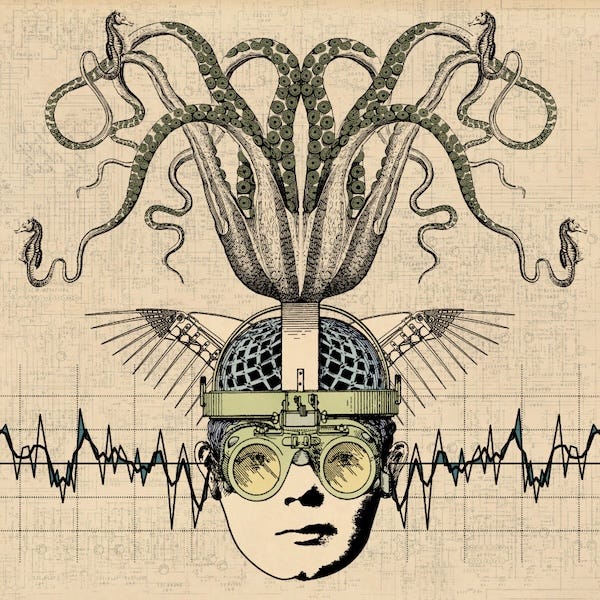
It is hard to believe that it has been ten whole years since New Jersey’s premier prog-fusion mad scientists Thank You Scientist unleashed Stranger Heads Prevail upon an unsuspecting world. Released on July 29, 2016, through Claudio Sanchez’s Evil Ink Records, this sophomore full-length album arrived with a simple, terrifying mandate: follow up an underground-acclaimed debut without accidentally creating a sonic black hole that swallows the entire band whole.
Looking back from the ten-year mark, Stranger Heads Prevail isn’t just a beloved fan-favorite chapter in the Thank You Scientist lore; it’s a masterclass in maximalism that somehow dodged every trap of “sophomore slump” gravity by simply strapping rocket boosters to a trumpet, a violin, and a dream.
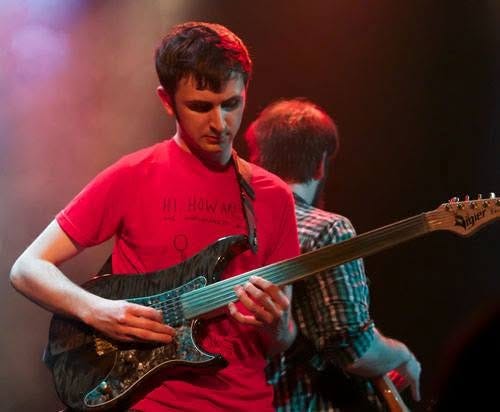
To understand what this record meant for the band, you have to look at the sheer logistical circus of how Thank You Scientist operates. Built around the orchestrations of guitar wizard and primary songwriter Tom Monda, the band operates like a jazz-fusion orchestra that accidentally wandered into a post-hardcore mosh pit.
This wasn’t a band formed by three guys meeting in a garage; it was an alliance of conservatory-trained assassins who decided that playing traditional radio rock was a punishable offense.
By the time this record rolled around, the lineup featured Salvatore Marrano, whose stratospheric, soulful vocals gave the band their distinct emotional anchor. Tom Monda, tearing through fretted guitars, fretless guitars, sitar, and the Chinese shamisen. Cody McCorry, stepping in on bass, theremin, and musical saw to provide low-end grooves more convoluted than your uncle’s conspiracy theories. Ben Karas, weaving magic on the five-string electric violin. Ellis Jasenovic (sax) and Andrew Digrius (trumpet/flugelhorn), bringing the brassy swagger. And finally, Odin Alvarez, holding down a drum kit with the kind of kinetic stamina usually reserved for Olympic athletes.
Following up 2012’s breakout Maps of Non-Existent Places was always going to be an exercise in high-wire tension. The debut had introduced the world to their eccentric genre-blending, leaving listeners wondering if they were a brilliant novelty act or the future of progressive music.
With Stranger Heads Prevail, the band answered with a resounding: “Why not both?”
Musically, the goal was to craft a rock record with the compartmentalized, microscopic detail of The Beatles’ Abbey Road or Queen’s A Night at the Opera. Tracks like the winding epic “Mr. Invisible” and the sprawling instrumental labyrinth “Rube Goldberg Variations” proved that the band wasn’t merely repeating their debut’s formula. Instead, they were expanding the blueprints. They took the jazz-fusion detours, the pop hooks, and the heavy metal muscle, jammed them into a blender, and somehow poured out a glass of crystal-clear musical lemonade.
In 2016, the musical landscape was a strange place. Mainstream rock was busy navigating the moody, atmospheric echoes of indie-pop and synth-rock, while the heavier underground was saturated with djent bands aggressively tuning their guitars down to the center of the earth and playing rhythm patterns that required a calculator to follow.
Into this arena stepped Thank You Scientist, wearing bright colors, brandishing woodwinds, and unashamedly writing massive, hook-laden choruses. Stranger Heads Prevail acted as a cultural antidote to musical pretension. It proved that complex, proggy composition didn’t need to be a joyless academic exercise. Music could be theatrical, danceable, challenging, AND intensely fun all at the same time. Landing on the Billboard charts proved that there was still an audience hungry for musicianship that didn’t take itself too seriously.
Upon release, the album received a warm reception from critics and a fiercely loyal fanbase. Reviewers praised the immaculate production—courtesy of Monda and the team—noting how every bizarre instrument, from the theremin to the violin, carved out its own distinct pocket in the mix without turning into sonic mud.

Of course, you can’t please everyone. A few cynics argued that the album was “too much”—a relentless, maximalist wall of sound that left little room to breathe. But for the faithful, that “too much” ethos was precisely the point. If your progressive rock album doesn’t occasionally make a casual listener clutch their pearls and ask, “What am I even listening to right now?”, are you even trying?
To really understand what made this 2016 record tick, you have to look at the standout cuts that turned a quirky underground concept into a definitive prog-fusion masterclass.
Following the brief, carnival-esque intro of “Prologue: A Faint Applause”, “The Somnambulist” is the track that kicks the front door down and sets the rules for the rest of the record. Driven by Odin Alvarez’s relentless drumming and Cody McCorry’s punchy low-end, this track wastes no time proving that the band’s metal roots are still firing on all cylinders. The trade-offs between Ellis Jasenovic’s saxophone and Andrew Digrius’s trumpet give the heavy riffs a bright, soaring counter-melody. It’s aggressive, but it has too much swagger to ever feel heavy-handed.
If you were trying to explain Thank You Scientist to a stranger using only one piece of audio evidence, you hand them the manic, vaudevillian fever dream that somehow doubles as a stadium-sized anthem, “Mr. Invisible.” This track is the ultimate showcase for the band’s kitchen-sink philosophy. It opens with an infectious, bouncy groove before spiraling into a labyrinth of horns, intricate guitar tapping from Tom Monda, and a killer sax solo from Ellis Jasenovic. Salvator Marrano’s vocals soar over the chaos with an effortless theatrical flair. It’s dense, it’s ridiculously catchy, and it proves that a song can feature conservatory-level arrangement while still inspiring you to let it all hang out in the mosh pit.
Clocking in at over nine minutes, “Psychopomp” is where the band stretches their canvas to its absolute limit, blending Middle Eastern scales, gypsy-jazz flair, and progressive storytelling. Epics of this length in modern prog can occasionally wander into self-indulgence territory, but “Psychopomp” flies by in what feels like half the time. It breathes, it builds, it drops into hauntingly quiet atmospheric passages, and then explodes back into life with layers of strings and horns. It proves that the band wasn’t just writing “songs with weird instruments,” but actual multi-movement compositions with genuine emotional weight.

What makes the tracklist of Stranger Heads Prevail so impressive is that there is virtually no fat on it. Even tracks like the labyrinthine “Rube Goldberg Variations” or the fiery “A Wolf in Cheap Clothing” function as essential gears in a massive, eccentric machine. They didn’t just write a collection of songs; they built an entire amusement park of thrill rides—and ten years later, the line to get back on is still remarkably long.
A decade down the road, Stranger Heads Prevail stands tall as a high-water mark for modern progressive alternative rock. It captured a lightning-in-a-bottle moment for a lineup that was firing on every single one of its seven cylinders. It’s an album that rewards deep, microscope-level listening, yet remains catchy enough to blast while driving down the highway (and I do, as long as my wife isn’t in the car with me… I might get stabbed with a nail file if she was).
The Album
Spotify:
Apple Music: https://music.apple.com/us/album/stranger-heads-prevail/1617477129
The Videos
“Mr. Invisible” Live Sun Session
On AudioTree Live
“The Amateur Arsonist’s Handbook”
“Caverns”
“The Somnambulist” Live 2016
The Band
https://www.thankyouscientist.com/
Be sure to check out the Audio Toxicity 2026 Bad Music Detox Protocol (AKA a playlist of songs covered so far…)