

The album that saved a chart-topping band’s legacy after everything changed
Flashback Friday: Bridge by Blues Traveler
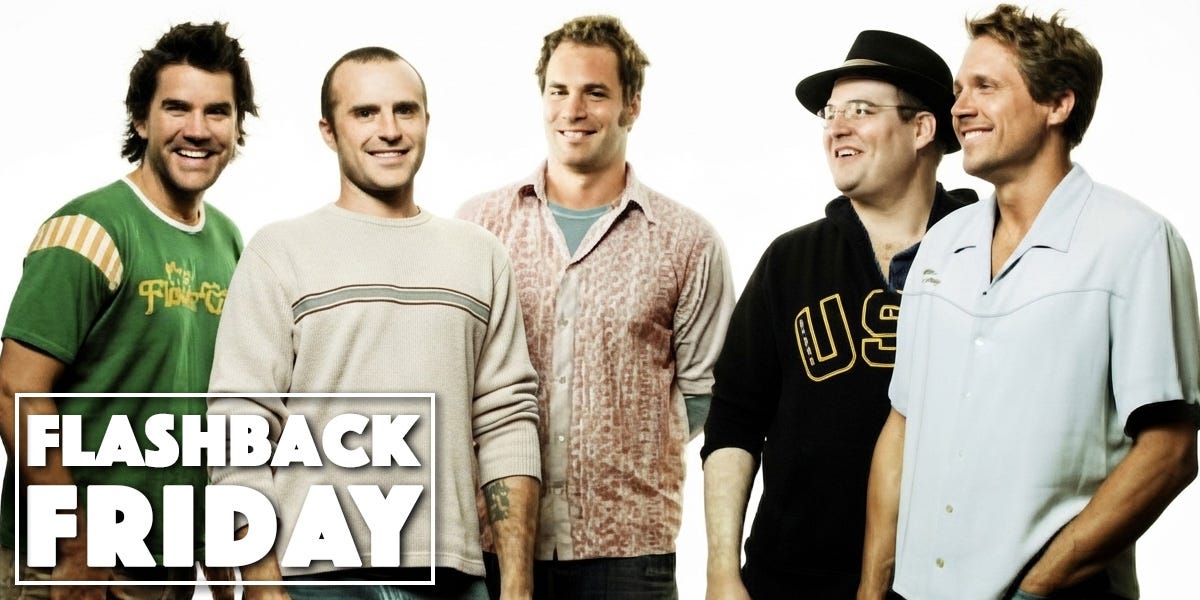
Back in May 2001, the music world was a very different place. Napster was terrorizing the recording industry, frosted tips were legally mandated for anyone under 25, and Blues Traveler—the undisputed heavyweights of high-speed harmonica pyrotechnics—found themselves at a massive crossroads.
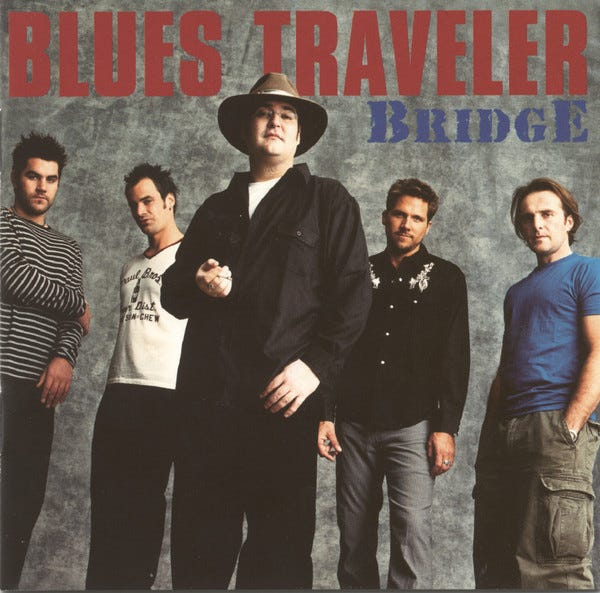
Fast forward 25 years, and Bridge stands as one of the most fascinatingly resilient, transitional artifacts of the post-millennial jam band landscape. It was an album born of profound tragedy, cautious optimism, and a desperate need to prove that life (and blistering blues-rock) can still go on.
To understand why Bridge mattered so much in 2001, you have to rewind a couple of years. In 1999, the band suffered an unimaginable blow with the tragic passing of founding bassist and “Brooklyn Bob” heavyweight, Bobby Sheehan. For a band that had been high-school buddies slugging it out since the late ‘80s in Princeton, New Jersey—frontman John Popper, guitar wizard Chan Kinchla, and drumming powerhouse Brendan Hill—losing Sheehan felt like losing an anchor.
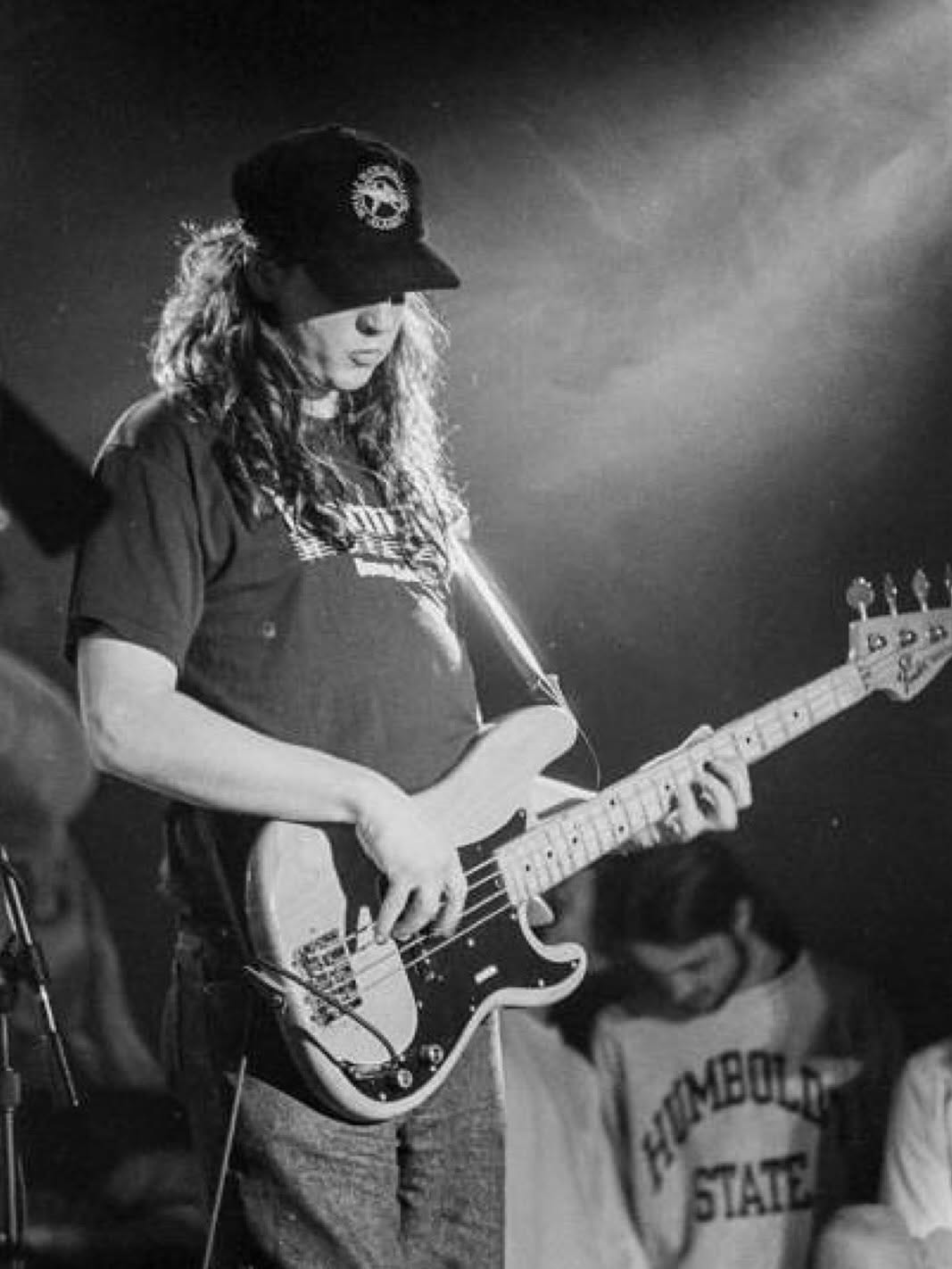
Instead of calling it a day, the surviving members decided that the music must travel on. They did something brilliant and slightly chaotic: they recruited a fresh rhythm-and-melody duo. Enter bassist Tad Kinchla (Chan’s brother) and keyboardist Ben Wilson.
Suddenly, the classic guitar-bass-drums-harmonica lineup had a whole new sonic playground. Bridge wasn’t just a sixth studio album; it was a literal life raft. Originally slated with the wonderfully cinematic working title Bridge Out of Brooklyn, the record served as a sonic handshake between the band’s gritty past and an unwritten future.
Picture the musical ecosystem of spring 2001. Mainstream radio was a bizarre battleground. You had the glistening, manufactured sheen of boy bands (‘NSYNC, Backstreet Boys) and teen pop princesses, alongside the brooding, aggressive angst of nu-metal (Limp Bizkit, Linkin Park), and the rising tide of post-grunge radio rock (Matchbox Twenty, Lifehouse).

Into this arena stepped Blues Traveler—veterans of the ‘90s H.O.R.D.E. festival circuit, purveyors of 10-minute improvisational journeys, and owners of one inescapable radio mega-hit (”Run-Around”). They weren’t wearing baggy skater shorts, nor were they heavily choreographed boy-band dancers. They were guys who preferred letting John Popper blow into a little piece of metal until his face turned the color of a ripe plum. Bridge was an unapologetic blast of organic, sweaty, blues-infused rock dropped right into the middle of the digital-pop revolution.
Upon its release, critics didn’t quite know what to do with Bridge. Metacritic logs a “mixed or average” score, which is critic-speak for: “We respect that these guys can actually play their instruments, but we also secretly miss when ‘Run-Around’ was playing on every single grocery store PA system in America.”
Some reviewers praised the album for trimming the fat—cutting back on noodling live jams in favor of punchier, radio-ready songwriting with a muscular production sheen courtesy of producer Matt Wallace. Others grumbled that without the massive commercial lightning strike of 1994’s Four, the band was just cruising on high-octane autopilot.
Yet, looking back 25 years later, the criticism feels largely beside the point. Tracks like “Girl Inside My Head” showcased a band that could pivot toward melodic, driving hooks without losing their soul. Popper’s vocals dialed back some of the unhinged operatic histrionics of earlier decades, revealing a richer, more world-weary charm. Meanwhile, Wilson’s keys and Tad Kinchla’s bass gave the grooves a fresh, funk-tinged bounce that kept things from getting stale.
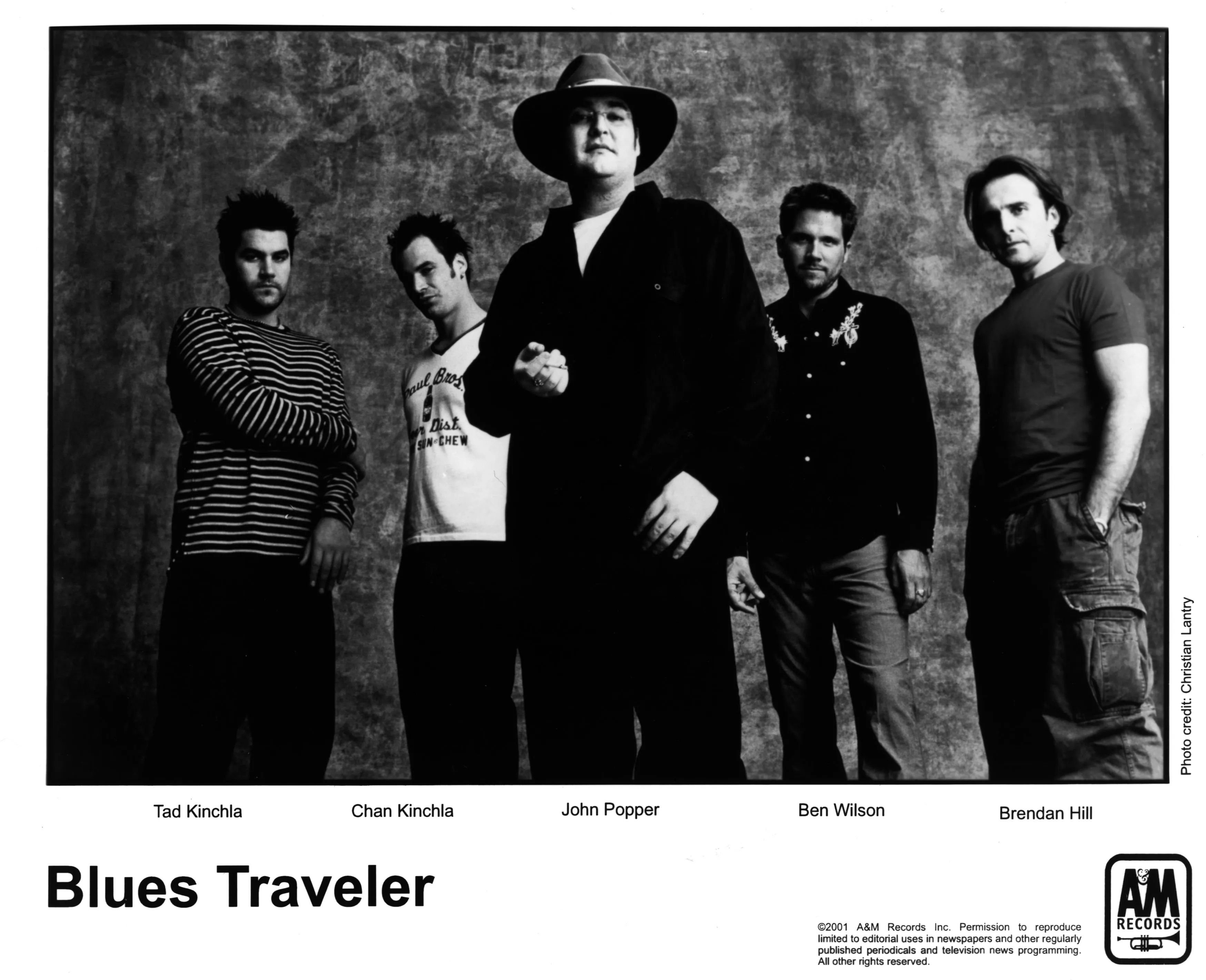
While Bridge functions as a complete psychological and sonic reset for Blues Traveler, the individual tracks are where the rubber actually meets the road.
“Pretty Angry (for J. Sheehan)” is clearly the emotional anchor of the entire record. Dedicated explicitly to late bassist Bobby Sheehan, this seven-minute epic is equal parts grief, rage, and explosive catharsis. Instead of writing a maudlin, tear-jerking acoustic ballad, Blues Traveler did what any self-respecting rock band should do: they channeled their sorrow into a towering, groove-heavy monster.
“Girl Inside My Head” is the pop-rock curveball that *almost* ruled the FM airwaves. Clocking in at a brisk three and a half minutes, this track proves that John Popper doesn’t need a 10-minute canvas to make an impression. The melody is sticky, the rhythm section locks in with a tight, modern bounce, and it remains one of the sharpest radio-friendly cuts of their later catalog.
Opening the album with a track titled “Back in the Day” is a profoundly self-aware move for a band that had been kicking around the touring circuit since the Reagan administration. It’s a track that looks backward with a wry smile, acknowledging how much the world—and the band—had changed. It acts as an energetic threshold. It tells the listener, “Yes, we’ve been through hell and back, and yes, things are different now, but we still know how to throw a party.”
The obligatory “let the instruments breathe” centerpiece is “Rage.” At over six minutes long, “Rage” is a nod to the die-hard fans who still wanted to smell the H.O.R.D.E. festival dust. But instead of sounding like a rehashed ‘90s live jam, it benefits immensely from the fresh blood in the lineup. Ben Wilson’s piano and organ work really shine here, giving the band a richer, almost classic-rock texture (think early Elton John or The Band getting a heavy blues-rock injection). It gives everyone room to stretch out without turning into a self-indulgent marathon.
Finally, the mid-album atmospheric grower that captures the band’s collaborative re-emergence. Positioned right before the emotional heavyweight “Pretty Angry,” “All Hands” acts as a crucial bridge within the tracklist itself. It leans heavily into the ensemble nature of the newly expanded lineup, giving both Ben Wilson’s keyboards and Chan Kinchla’s guitar room to sketch out a wider, more spacious sonic landscape. It exemplifies the “all hands on deck” mentality required to rebuild the band after tragedy. John Popper’s vocals carry a reflective, steady warmth rather than frantic urgency, letting the groove wash over the listener and proving that the band could craft sophisticated mid-tempo textures just as easily as high-speed blues-rock.

What makes Bridge fascinating on a track-by-track level is the tension between wanting to write tight, radio-conscious hooks and needing to purge a massive amount of emotional baggage. Even on the punchier tracks like “Just for Me” or “You Reach Me,” there’s a distinct sense of a band reinventing its own chemistry on the fly—turning a potential tragedy into a surprisingly durable second act.
Bridge might not have smashed the commercial charts the way its predecessors did, but its cultural importance to the Blues Traveler legacy is monumental. It proved that a band could endure devastating loss, swap out key members, and still sound like nobody else on earth.
It remains a testament to the fact that no matter how much pop music changes, there will always be a place in the universe for a howling harmonica, a dizzying guitar solo, and a group of musicians who simply refuse to stop traveling.
The Album
Spotify:
Apple Music: https://music.apple.com/us/album/bridge/1450529081
The Videos
“Back In The Day” live on Conan O’Brien in 2001
“Girl Inside My Head” Live on Letterman in 2001
“Pretty Angry” Live in 2001
“All Hands” live on Music Choice in 2001
The Band
Be sure to check out the Audio Toxicity 2026 Bad Music Detox Protocol (AKA a playlist of songs covered so far…)