

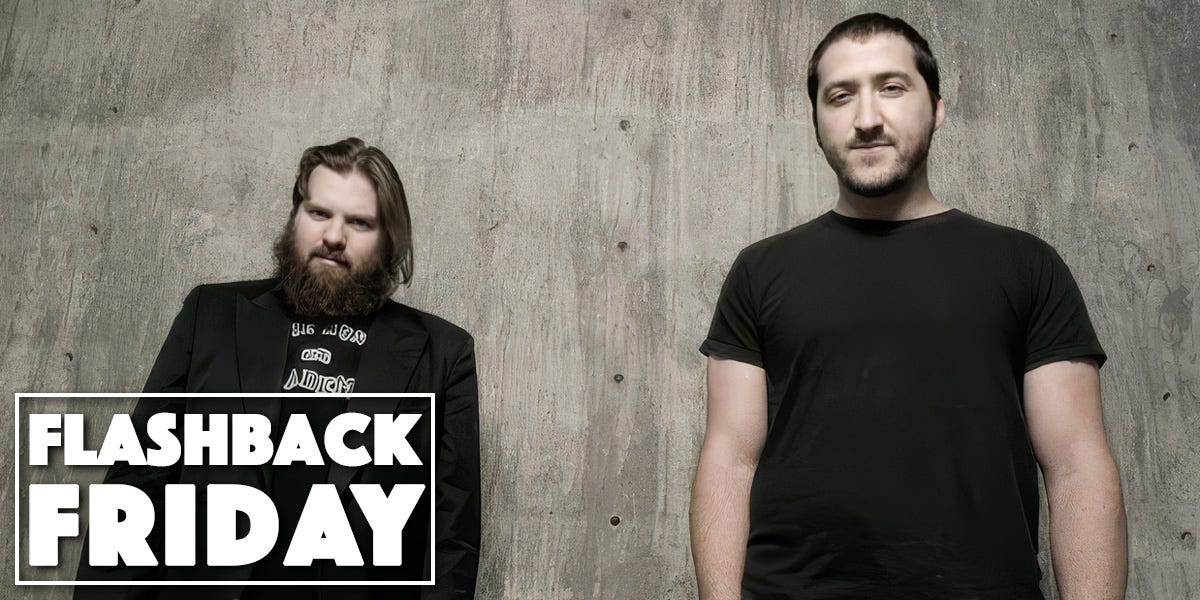
Back in October 2001, amidst this cultural chaos previously discussed in other recent Flashback Friday posts, two indie-rock veterans—Rob Crow (formerly of Thingy and Heavy Vegetable) and Armistead Burwell Smith IV, a.k.a. Zach Smith (formerly of indie darlings Three Mile Pilot)—looked at each other and decided that what the world really needed was a collection of intricately woven, melancholic pop songs disguised as low-fi rhythmic science experiments.
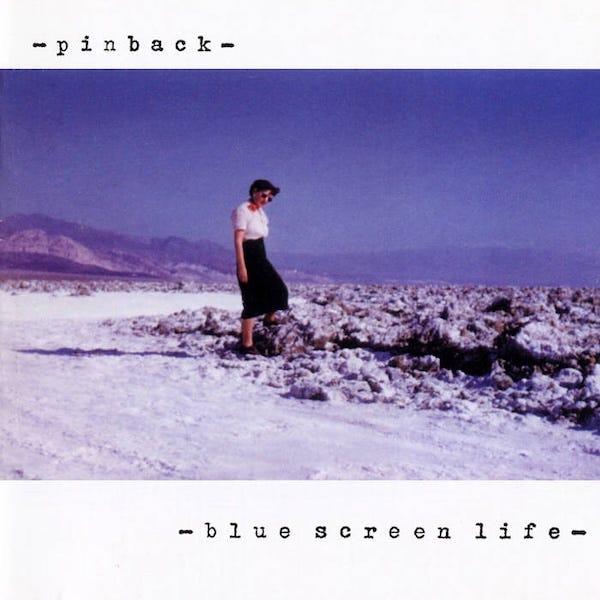
Thus, exactly a quarter-century after its release, we find ourselves looking back at Pinback’s sophomore masterwork, Blue Screen Life. It is an album that cemented a legacy, perfected a sound, and quietly shaped the DNA of indie rock for decades to come.
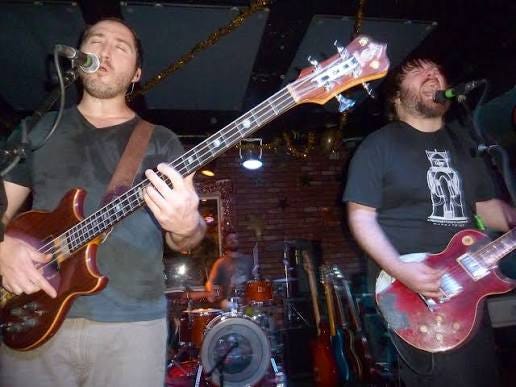
To best understand Blue Screen Life, you have to understand how Crow and Smith ended up together. They weren’t manufactured in a corporate boardroom or brought together by an overly ambitious A&R rep looking for the next big thing. They were just two guys who had kicked around the 1990s San Diego underground music scene, briefly lived as roommates, and realized they possessed a freakish, telepathic creative chemistry.
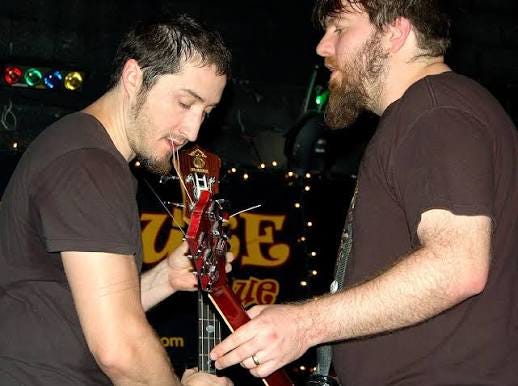
Smith played the bass not like a standard-issue four-string anchor, but as a lead melodic instrument—weaving rolling, cascading arpeggios that felt like a second guitar. Crow brought an angelic, breathy vocal delivery paired with quirky guitar hooks and a knack for wrapping deeply bizarre lyrical concepts in gorgeous harmonies. When they dropped their self-titled debut in 1999, it was a cult success. But Blue Screen Life was the moment they stopped dabbling and genuinely struck gold.
When they recorded Blue Screen Life mostly in Smith’s house, Pinback was essentially a DIY operation functioning on shoestring budgets and sheer stubborn perfectionism. For the band, this record was the ultimate high-wire act: taking the jagged, emotional edges of late-90s indie/emo and smoothing them out into something hypnotic, rhythmic, and lush.
It proved that Pinback wasn’t just a “side project” vanity experiment to keep busy between their primary bands—it was the main event. Tracks like the bouncy, idiosyncratic “Boo” and the absolute masterpiece “Penelope” (which apparently is famously, and hilariously, a love song written about a pet fish with dropsy) demonstrated that the duo could construct complex, interlocking vocal and instrumental loops that sounded like a full orchestra of melancholic nerds.
Side Note: What the heck is dropsy, you ask? I sure as hell didn’t know… But here’s what the internets said about it: “Aquatic dropsy is a clinical symptom in fish characterized by severe abdominal swelling and a pinecone-like appearance caused by fluid buildup (edema) in the body cavity and tissues.” So now you know!
As has been stated in earlier FBF posts, in 2001, the mainstream musical landscape was dominated by two extremes: nu-metal bands screaming their collective daddy issues over seven-string drop-D riffs, and the garage-rock revival (led by folks like The Strokes) preparing to leather-jacket their way onto every magazine cover in existence.
Blue Screen Life didn’t care about any of that. It existed in a cozy, nocturnal parallel universe. Culturally, the album captured the dawning anxiety of the digital age—hinted at right there in the title and tracks like “Offline P.K.” and “X.I.Y.”. It soundtracked the late nights spent illuminated by CRT computer monitors, lingering in early internet chat rooms, or playing video games until your eyes crossed.
Critics at the time didn’t know what to do with them either. Pitchfork gave the album a lukewarm shrug, seemingly baffled by a band that preferred intricate groove-pop over abrasive post-hardcore or loud hype. But fans? Fans loved it! It became the ultimate underground handshake—if you knew who Pinback was, you were part of an enlightened club of people who appreciated rhythmic precision, quirky math-pop math-rock arrangements, and vocal harmonies sweeter than a melted Slurpee.
Rob Crow and Zach Smith didn’t just write “songs”—they built little rhythmic and melodic puzzles boxes that somehow ended up being deeply catchy. Here is a breakdown of the standout tracks that turned a cult-classic indie record into an absolute masterwork.
Serving as the opening track, “Offline P.K.” instantly establishes the atmospheric mood of the album. It drops you right into that pre-broadband, late-night internet aesthetic with hushed vocals, clicking textures, and a creeping, mournful bass groove. It doesn’t scream for your attention; instead, it politely taps you on the shoulder at 2:00 AM and invites you into its gloomy, comforting orbit.
The crown jewel, the fan-favorite heavyweight, and arguably the defining track of Pinback’s entire catalog is track five, “Penelope.” Built around Zach Smith’s dizzying, circular bass line and a bouncy, hypnotic rhythm, the song carries a deceptively breezy and triumphant melody. Of course, the sheer comedic poetry of it lies in the lyrics: it’s a deeply earnest, sweeping indie-rock dedication written for Crow’s pet fish suffering from dropsy. Only Pinback could take a literal aquarium tragedy and turn it into a track that indie kids would weep to in dimly lit bedrooms.
If you want a perfect example of how Smith’s bass-playing acts as a lead instrument, look no further than “X.I.Y.” The song motors along on a relentless, intricate low-end cascade that feels like clockwork gears turning in sync. Crow’s vocals float effortlessly on top, creating a gorgeous contrast between nervous-system tension and melodic sweetness. It’s structurally clever without ever sounding like it’s showing off.
True to its name, “Prog” leans directly into the duo’s penchant for interlocking, asymmetric time signatures without ever losing its infectious groove. It’s a show piece for how Rob Crow and Zach Smith could take complex, math-rock scaffolding and drape it in breezy, melancholic vocal hooks, proving that brainy musicianship and effortless pop sensibilities could happily coexist in the same three-minute package.
Looking back 25 years later, Blue Screen Life sounds remarkably timeless. While many of its 2001 major-label competitors are trapped squarely in the amber of early-2000s nostalgia, Pinback’s sophomore effort sounds fresh because it was built on pure composition and texture rather than fleeting trends.
Smith and Crow went on to heavily influence a massive wave of indie rock, math rock, and dream pop acts throughout the 2000s and 2010s. Not bad for a couple of guys recording indie-pop anthems about aquatic dropsy in a California living room, eh?
The Album
Spotify:
Apple Music: https://music.apple.com/us/album/blue-screen-life/1755414984
The Videos
“Penelope” live
“X.I.Y.” live
“Prog” live from earlier this year
The Band
Be sure to check out the Audio Toxicity 2026 Bad Music Detox Protocol (AKA a playlist of songs covered so far…)