

The Unapologetic Sound of Musical Gymnastics
Flashback Friday: Unorthodox Behaviour by Brand X
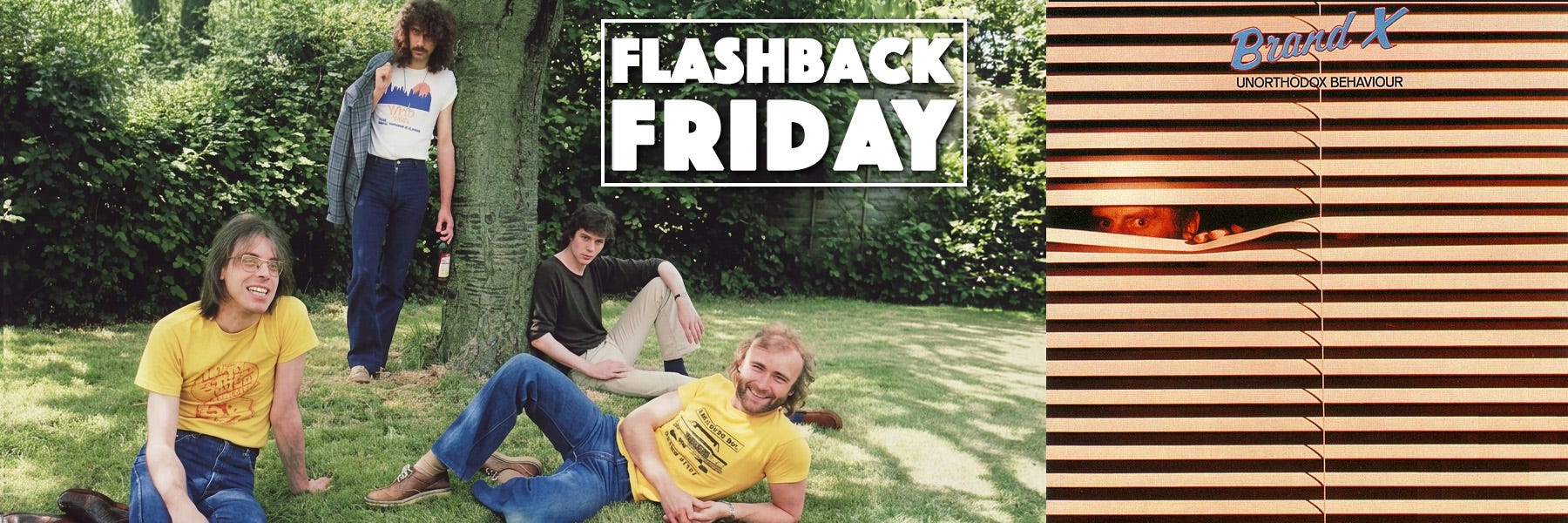
For an entire generation of music fans, Phil Collins is simply the affable, balding, pudgy frontman who sang soft-rock love songs, dominated MTV, and occasionally hit that one massively famous, gated-reverb drum fill on “In the Air Tonight.” Because his solo career leaned so heavily into massive, radio-friendly pop hits—often built around drum machines and simple 4/4 beats—his reputation as a pop star completely eclipsed his history as a rhythmic powerhouse. It’s easy to assume the guy singing “Sussudio” is just a standard pop timekeeper, which is exactly why Unorthodox Behaviour by Brand X is such a shock to the system for a lot of people. It is the ultimate proof that before he was a stadium-filling, Disney-aligned pop idol, he was a fearsome, odd-meter-playing titan of the progressive scene.
But let’s take a step back in time to the mid-70s… A time when musicians decided that playing “normal” songs was far too easy and that what the world really needed was a frantic, math-heavy jam session that lasted for an entire side of an LP. Enter Brand X, a band whose very name sounds like a placeholder they forgot to change, yet who delivered one of the most high-octane, “don’t-try-this-at-home” jazz fusion records of the decade: 1976’s Unorthodox Behaviour.
If you think Brand X sounds like a group of guys who just kind of... materialized in a rehearsal space, you aren’t far off. The band was a loose collective of session wizards—bassist Percy Jones, keyboardist Robin Lumley, and guitarist John Goodsall—who had been crossing paths while working on projects for the likes of Brian Eno and Eddie Howell.
Then, there was the “hired hand” in the corner: a guy named Phil Collins. Yes, the same Phil Collins who was simultaneously trying to keep Genesis afloat after Peter Gabriel jumped ship. While the press at the time desperately tried to brand the group as “Phil’s little side project,” the reality was far more collaborative. They were essentially a bunch of elite musical nerds who, after finishing their “real” jobs, decided to spend their free time playing things that would make a conservatory student cry.
Side Note: For more context on what was going on for Phil and Genesis at this time you can refer back to this FBF post from earlier this year:
Flashback Friday : A Trick Of The Tail by Genesis
·It’s hard to overstate the sheer “sink or swim” stakes surrounding Genesis in 1975… When charismatic frontman Peter Gabriel departed, the music press—and even some fans—had already begun writing the band’s obituary. The prevailing wisdom was that Gabriel

Unorthodox Behaviour is essentially a high-wire act with no safety net. It’s an all-instrumental assault that bounces between “oh, that’s quite lovely and melodic” to “how are there this many notes happening in one second?” Goodsall and Lumley were the atmosphere architects. On tracks like “Euthanasia Waltz,” they provide that lush, sprawling progressive rock texture that stops the whole thing from turning into a pure headache.
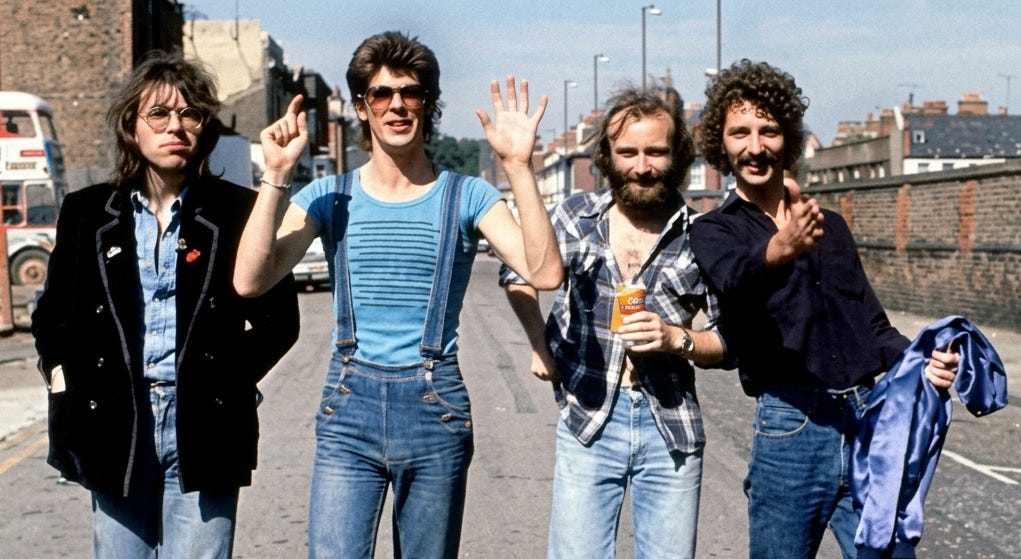
Jones and Collins were the engine room, providing the kind of frenetic, stuttering, and deeply percussive backbone that defines tracks like the opener, “Nuclear Burn.” If you want to know what Phil Collins sounded like when he wasn’t singing about 80s politics or lost loves, this is it—it’s fast, it’s angry, and it’s arguably some of his best drumming ever.
Culturally, the record captured a specific moment of transition. It was an era where “virtuosity” was held in high regard, and listeners often sought out music that challenged conventional structures. Brand X didn’t aim for the charts; they aimed for a level of musical complexity that rewarded repeat listens.
It stands as a document of a time when seasoned players felt free to step out of their usual roles to see how far they could push their collective ability. It remains a record that feels less like a product of the industry and more like a high-level conversation between friends who just happened to be world-class musicians.
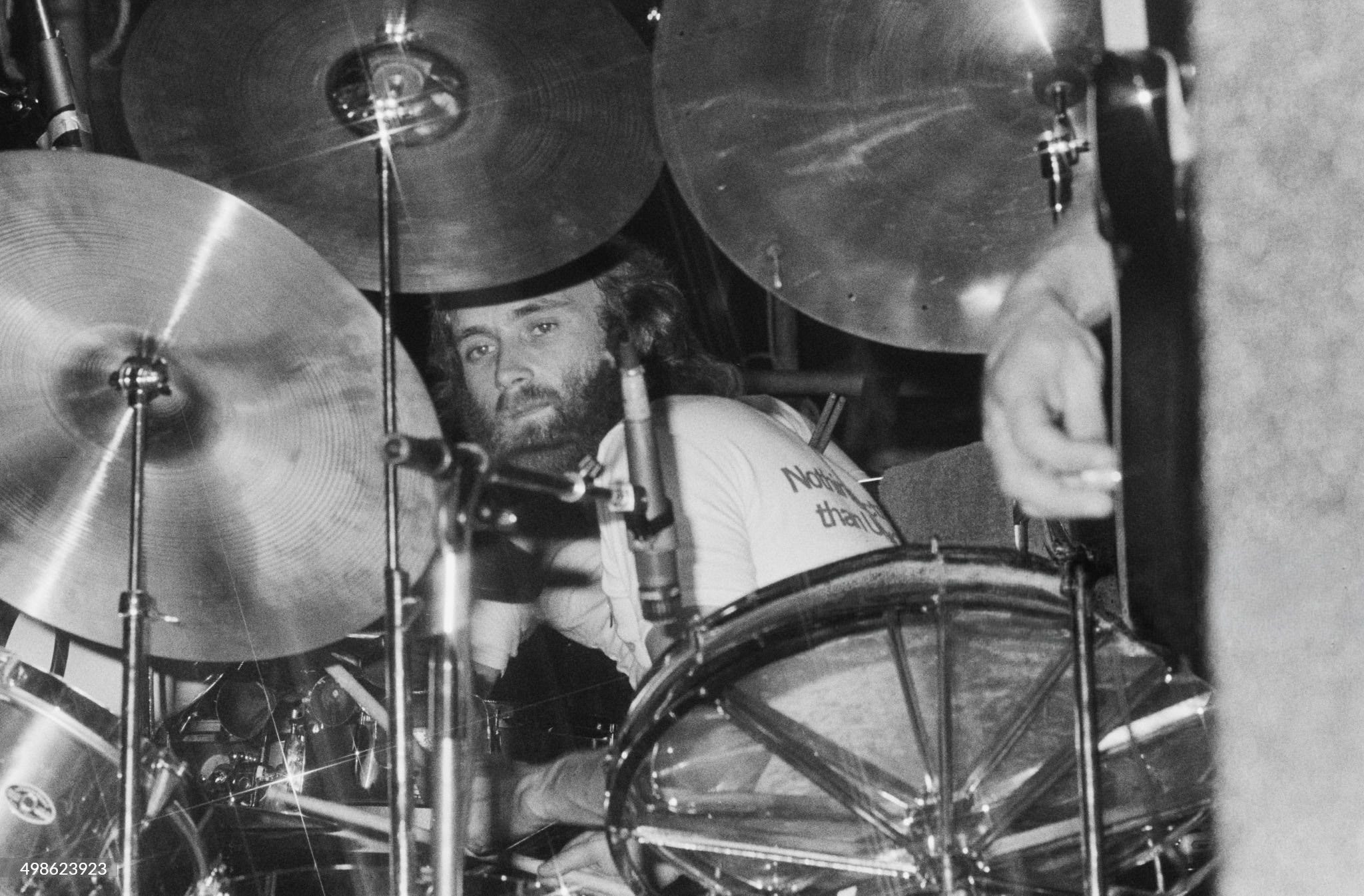
For Phil Collins, Brand X represented a vital “musical playground” during a period of significant uncertainty with Genesis. In 1975, following Peter Gabriel’s departure, Collins found himself with unexpected downtime and a desire to challenge himself beyond the structures of progressive rock. For Collins, this project wasn’t just a side gig; it was a space where he could fully indulge his love for jazz-fusion and complex rhythmic exploration.
In contrast to his work in Genesis, where his playing had to serve the song’s narrative and atmospheric needs, Brand X allowed him to lean heavily into the fusion style championed by drummers like Billy Cobham and Tony Williams and bands like The Mahavishnu Orchestra. He embraced a “knitting” approach—a term he later jokingly used to describe the frantic, intricate flourishes and patterns that were much denser than what he could get away with in more mainstream rock contexts.
Interestingly, Collins credited his ability to navigate the album’s demanding odd-metered compositions to his background as a singer. He didn’t approach complex time signatures by counting mathematically; instead, he would “sing” the rhythmic patterns in his head. This helped him maintain a sense of “feel” and flow, ensuring the music never sounded stiff or overly academic.
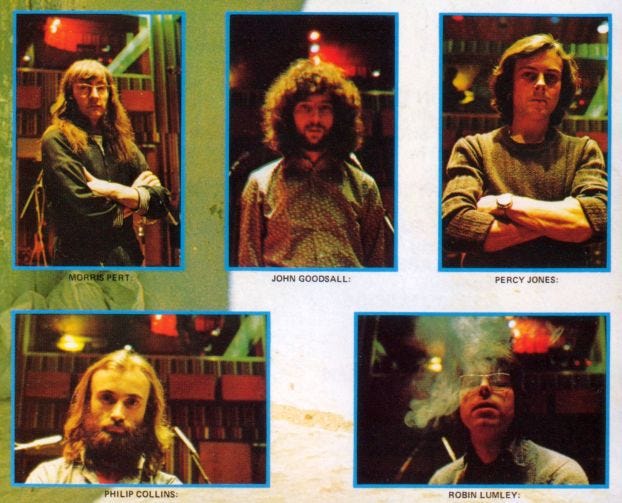
Following Unorthodox Behaviour, the band released Moroccan Roll (1977) and then pretty quickly entered a period of continual flux. Collins’s increasing Genesis commitments led to a revolving door of drummers, including the highly respected Kenwood Dennard and Chuck Burgi. By the time of 1978’s Masques, the band had shifted toward a more streamlined, fusion-heavy sound, and by 1980’s Do They Hurt?, the original creative chemistry had largely dissipated. The band officially dissolved in 1981, as the members moved on to solo projects and session work although reunited occasionally with top session players as needed.
Unorthodox Behaviour remains one of the most respected showcases of technical prowess for all the members, but especially Collins. His work on tracks like “Nuclear Burn” displays a level of intensity and precision that even seasoned fusion players found impressive. It proved that he was a world-class drummer capable of keeping pace with the most demanding instrumentalists in the scene.
So yea, Phil could actually play drums. If you’re still skeptical, just listen.
The Album
Spotify:
Apple Music: https://music.apple.com/us/album/unorthodox-behaviour/723752520
The Videos
“Running on Three” - live at the Marquee Club 1976 (Audio Only)
Not from this record, but this a great up-cycled video of the song “And So To F” where Phil even does a little singing:
The great Steve Hackett (former Genesis guitarist) on Brand X, Phil and Percy Jones:
The Band
Be sure to check out the Audio Toxicity 2026 Bad Music Detox Protocol (AKA a playlist of songs covered so far…)